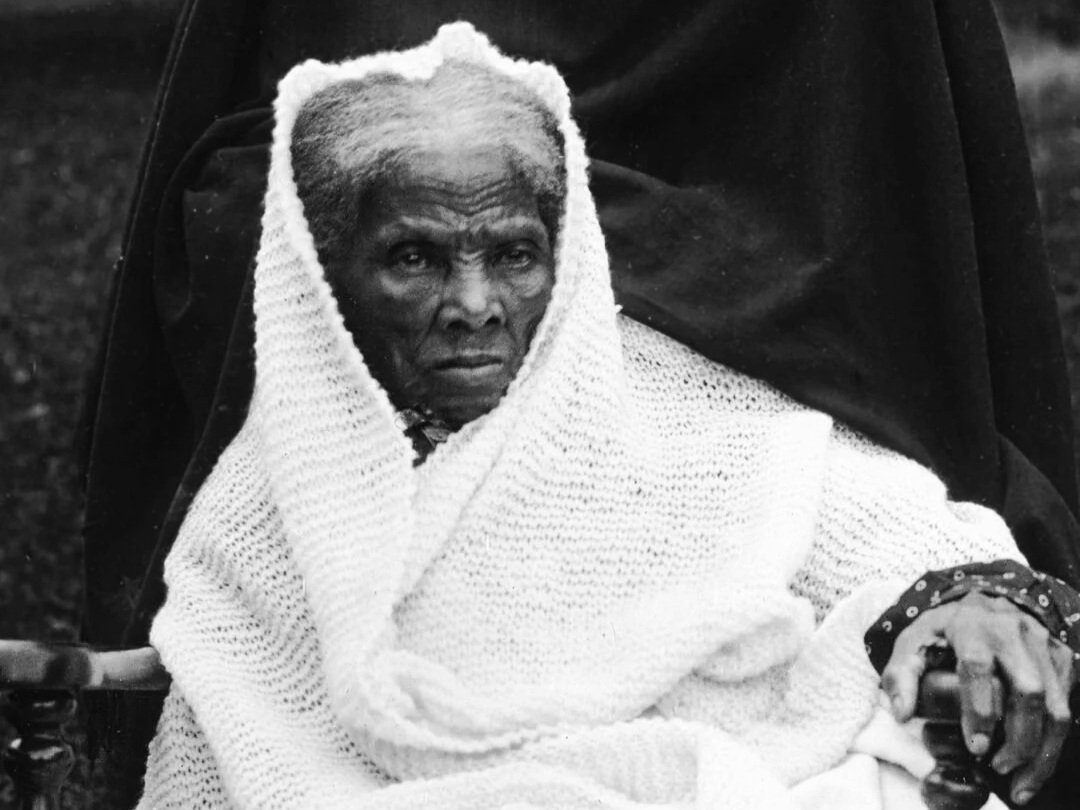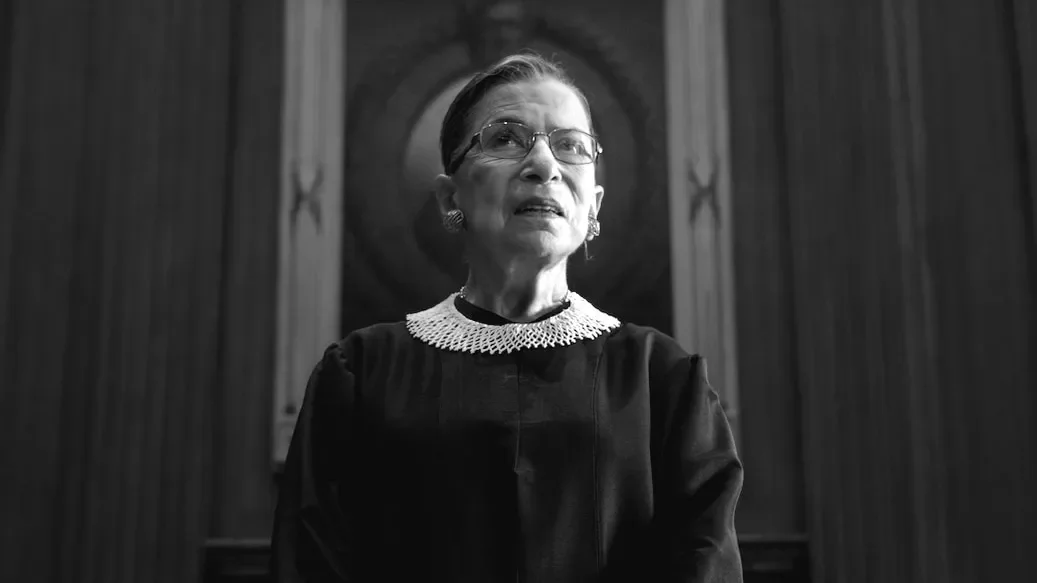
Image: seated portrait of Harriet Tubman, taken near the end of her life, c. 1913. Britannica.
In our Icon Series, we give thanks to those whose lives have laid the foundation for our journey toward justice and equity. In this season of gratitude and reflection, the New Hampshire Center for Justice & Equity celebrates the extraordinary life of Harriet Tubman.
About Harriet Tubman
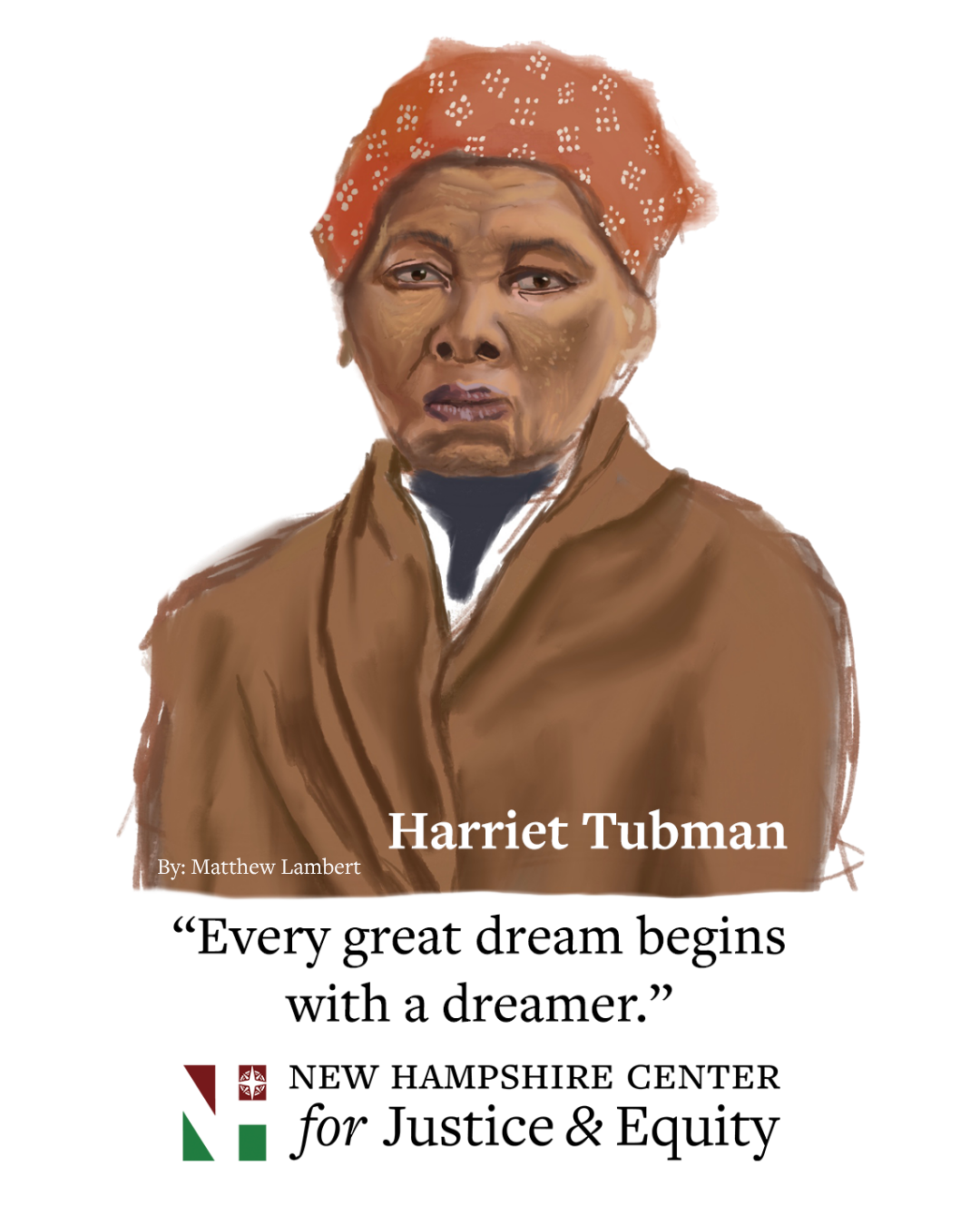
Illustration of Harriet Tubman for NHCJE’s 2026 Icon Series, drawn by Matt Lambert. Learn More.
Harriet Tubman was a courageous abolitionist, freedom seeker, and humanitarian who devoted her life to challenging slavery and fighting for equality. After escaping enslavement, she returned to Maryland repeatedly to help family members and others reach freedom through the Underground Railroad. During the Civil War, she served as a nurse, scout, and spy for the Union Army, helping lead a military raid that freed hundreds of enslaved people. In her later years, Tubman advocated for women’s suffrage and established a home for aging and formerly enslaved Black people. Her life reflects a lifelong commitment to freedom, dignity, and justice.
Early Life And Growing Up In Bondage
Born Araminta Harriet Ross in Dorchester County, Maryland, Tubman’s exact birth date is unknown, though historians believe she was born between 1820 and 1825, with recent research suggesting early 1822. She was one of nine children born to enslaved parents, Harriet Green and Ben Ross, who nicknamed her “Minty”, and was enslaved from birth.
As a child, Tubman was separated from members of her family, as three of her sisters were sold to distant plantations, and her mother fought to prevent the family from being further divided when a trader attempted to purchase her youngest son. She was forced to work from a young age and endured physical violence that left lasting injuries, including a head injury that later caused severe headaches and narcolepsy.
Tubman’s father became a free man at the age of 45, according to the terms of a previous enslaver’s will, but this did not mean independence or security. He continued working for his former enslavers, while Tubman, her mother, and her siblings remained in bondage. In 1849, after the death of her own enslaver and amid growing fears that she or members of her family could be sold, Tubman decided to escape. Tubman had married John Tubman, a free Black man, in 1844, but he did not accompany her when she escaped enslavement.
Leading Others To Freedom On The Underground Railroad
For Tubman, liberation was deeply connected to family, community, and the ability to determine one’s own life. She fled with the help of the Underground Railroad on the nearly hundred-mile journey to Philadelphia, Pennsylvania, but returned to Maryland again and again to help family members and others escape too.
In the summer of 1857, Tubman rescued her elderly parents, as her father was at risk of being arrested for suspicion of sheltering the Dover Eight, a group of eight freedom seekers from her home county in Maryland. Between 1850 and 1860, she made about 13 trips across the Mason-Dixon line, personally guiding approximately 70 people to freedom and providing instructions and assistance to others who made their own way north.
This work was extraordinarily dangerous, as the Fugitive Slave Act of 1850 called for the return of people who had escaped enslavement, and required law enforcement in the North to capture free Black Americans. In response, Tubman increasingly directed people into Canada, where slavery was prohibited.
Her ability to navigate the Maryland’s Eastern Shore’s waterways and landscape, gather information, and build relationships within networks of freedom seekers made her an effective conductor on the Underground Railroad for almost a decade. This earned her the nickname “Moses,” a reference to the biblical figure who led the Israelites out of slavery.
Serving the Union In The Civil War
Tubman was connected to other abolitionists, like Frederick Douglass, and was called to action when the American Civil War began in 1861. She served the Union as a cook, laundress, and nurse, using native plants to treat soldiers, a skill she learned as a young woman. Two years later, she was tasked with gathering intelligence from a web of informants behind Confederate lines.
In 1863, Tubman became the first known woman to lead a military operation in U.S. history. Working with Colonel James Montgomery and Black soldiers of the 2nd South Carolina Volunteers, she helped plan and carry out an operation along the Combahee River. The raid liberated more than 700 enslaved people, many of whom subsequently joined the Union Army.
Yet, Tubman’s military service was not fully recognized or compensated during her lifetime, unlike her male counterparts. She spent years seeking a pension for her wartime work, and in 1899, she finally received $20 a month for her service as a Civil War nurse, while recognition for her work as a scout and spy remained limited.
Continuing The Fight For Freedom And Equality
After the Civil War ended in 1865, Tubman continued working toward freedom and equal rights. She became an active voice in the women's suffrage movement and spoke at suffrage gatherings alongside other prominent activists. She maintained relationships with Susan B. Anthony, Lucretia Mott, and Martha Coffin Wright, and advocated for political participation, racial justice, and the rights of Black women.

Image: The earliest known photograph of Harriet Tubman, taken by Powelson, Benjamin F., circa 1868-1869. Albumen and silver on photographic paper on card mount. National Museum of African American History and Culture.
Tubman spent her later years in Auburn, New York, where she had purchased a home and land in 1859. There, she cared for family members and welcomed people who needed food, shelter, and support. She married a Civil War veteran named Nelson Davis in 1869, and in 1874, the couple adopted a baby girl named Gertie.
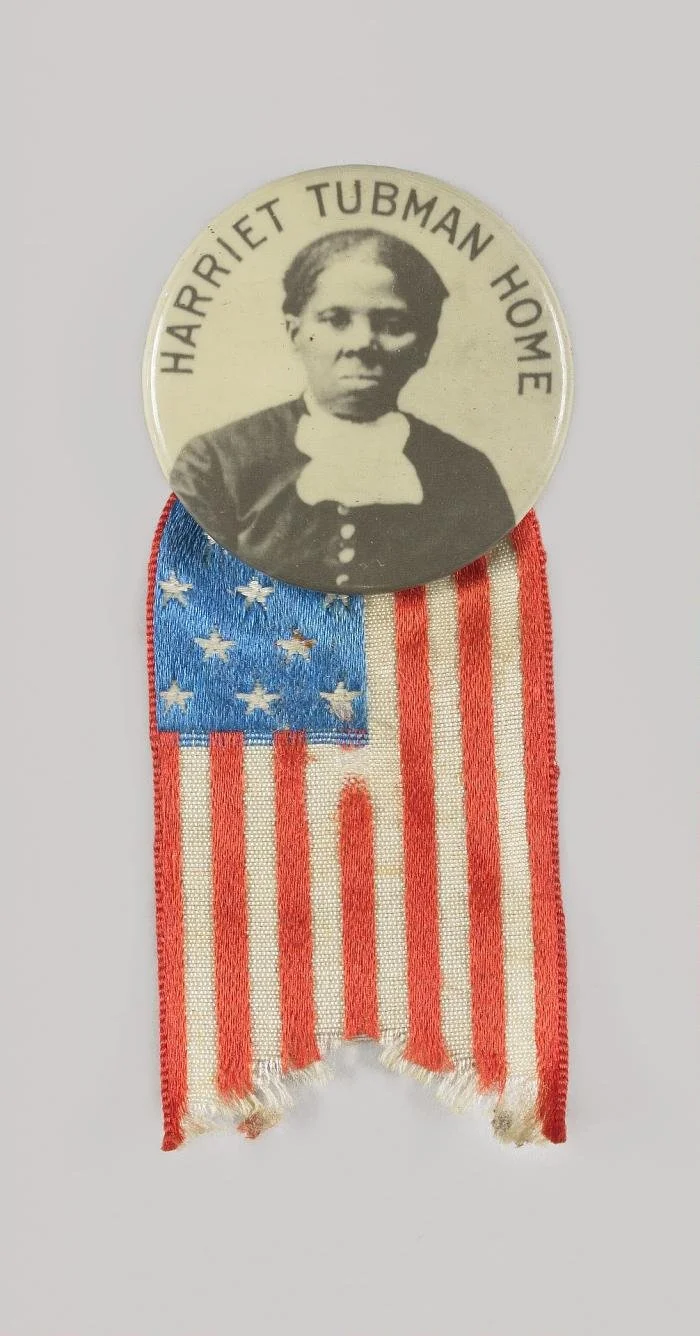
Image: Pinback button for the Harriet Tubman Home, 1954. National Museum of African American History and Culture.
Even as her own financial circumstances remained difficult, Tubman continued giving to others. In 1903, she donated a parcel of her land to the African Methodist Episcopal Zion Church, establishing the Harriet Tubman Home for the Aged, which opened in 1908 and provided care to older and impoverished Black Americans.
A Legacy Of Courage And Care
Harriet Tubman died of pneumonia on March 10, 1913, and was buried with military honors in Auburn, New York. She devoted her life to challenging systems that denied Black people freedom and denied women political rights, while also taking care of those left behind.
Today, Tubman is remembered and honored as an abolitionist, Underground Railroad conductor, military leader, suffragist, and humanitarian. She repeatedly chose to use her own freedom to help expand freedom, dignity, and opportunity for others. More than a century after her death, that commitment remains at the heart of her legacy.
In honoring Harriet Tubman as an NHCJE Icon, we are reminded that justice is not a single destination. It is an ongoing practice of confronting oppression, building community, caring for others, and continuing the work even after one chapter of the struggle has ended.
Learn More about Harriet
https://www.biography.com/activists/harriet-tubman - Biography.com
https://nmaahc.si.edu/explore/stories/harriet-tubman - National Museum of African American History & Culture
https://www.womenshistory.org/education-resources/biographies/harriet-tubman - Womenshistory.org
https://home.nps.gov/articles/harriet-tubman-and-the-underground-railroad.htm - National Park Service
Call to Action

The survey will help inform the New Hampshire (NH) Environmental Justice (EJ) Assessment, which will serve as a vital step to ensuring that NH residents—no matter their income, race, or where they live, work, or play—have clean air and water, accessible green spaces, and healthy homes.
All responses are anonymous
It takes about 6-12 minutes to complete
The survey will be open until November 17, 2026
Adults aged 18 years or older living in New Hampshire are eligible to take the survey
Survey respondents can enter a drawing for one of five $100 gift cards
The study is being supported by The New Hampshire Environmental Justice Assessment is sponsored by The New Hampshire Conservation Law Foundation, Clean Energy New Hampshire, and New Hampshire Center for Justice & Equity.