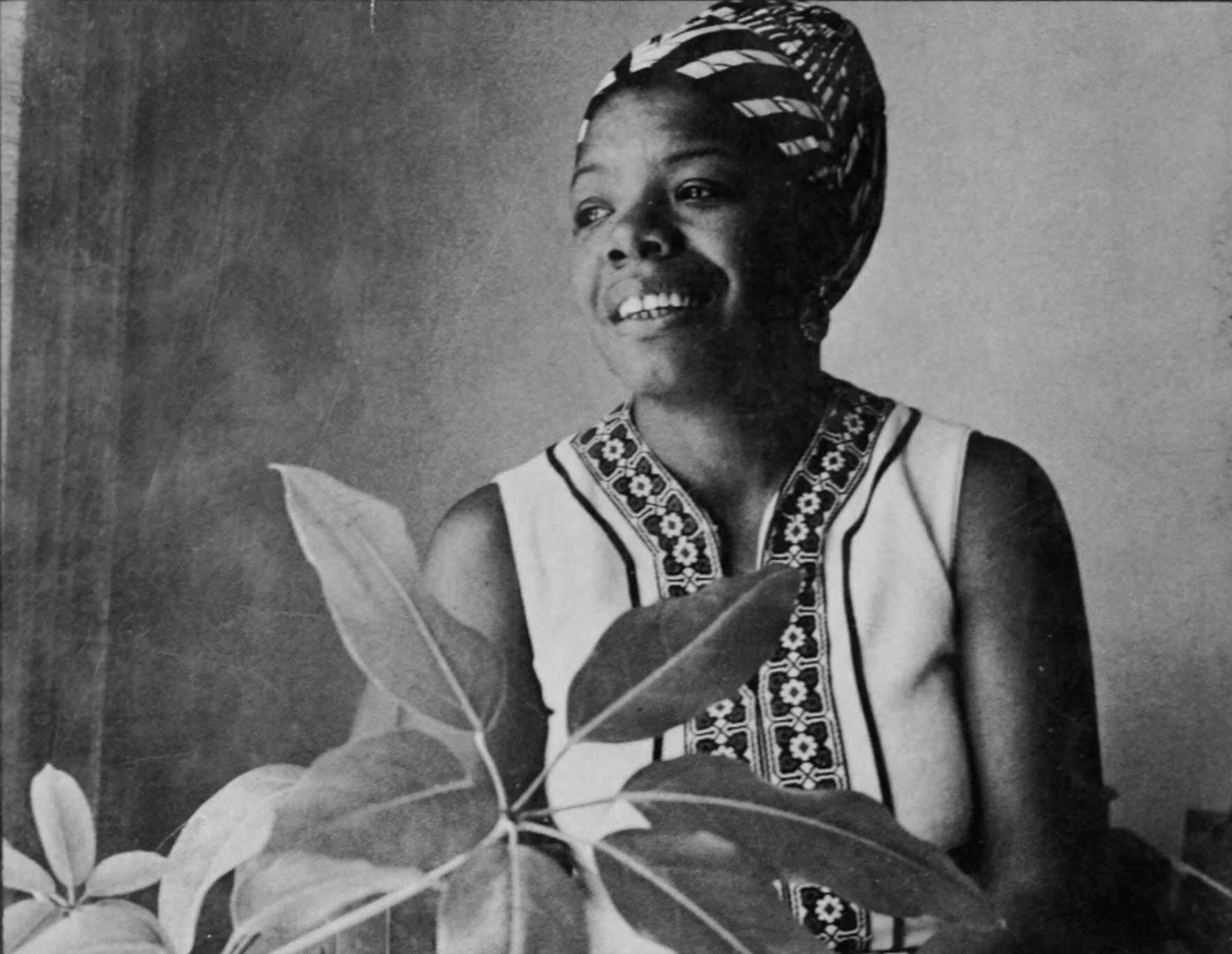
Portrait photograph of Maya Angelou by Jill Krementz from the 1975 first-edition dust jacket of ‘Oh Pray My Wings Are Gonna Fit Me Well’. Image Source: Wikimedia Commons.
In our Icon Series, we give thanks to those whose lives have laid the foundation for our journey toward justice and equity. In this season of gratitude and reflection, the New Hampshire Center for Justice & Equity celebrates the extraordinary life of Maya Angelou.
About Maya Angelou
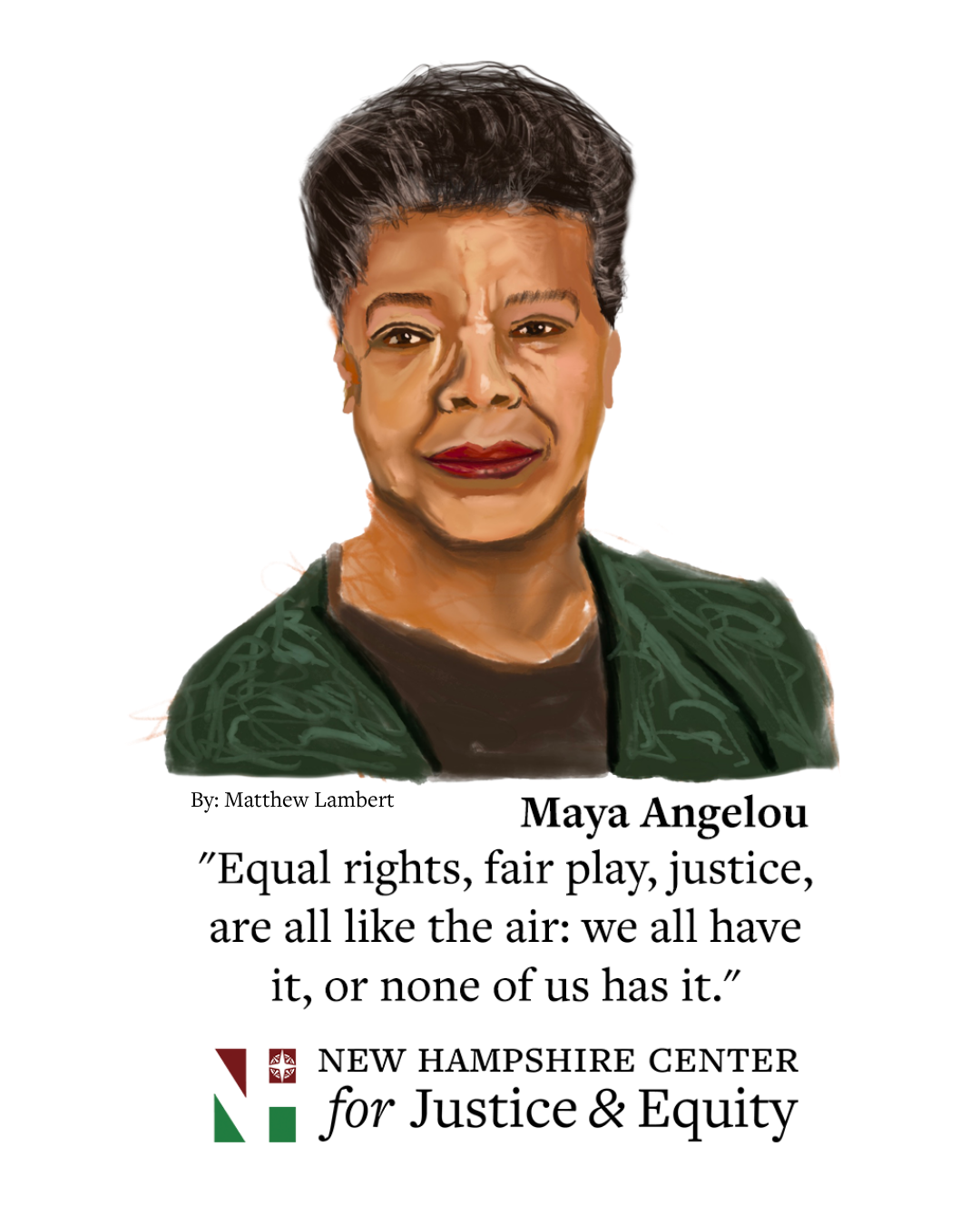
Sticker from NHCJE’s Icon Series, designed by Matt Lambert.
Maya Angelou was a celebrated author, poet, performer, educator, and civil rights activist whose words helped generations of readers understand the impacts of racism, the strength of the human spirit, and the importance of dignity and belonging. Through her writing and activism, Angelou brought personal experiences into public discourse about race, gender, trauma, and resilience. Her work challenged audiences to confront injustice while recognizing the humanity and potential of others.
Rising in the Face of Adversity
Born Marguerite Ann Johnson on April 4, 1928, in St. Louis, Missouri, Angelou spent part of her childhood in Stamps, Arkansas, where she lived with her paternal grandmother and older brother, Bailey. Growing up in the segregated South, she experienced racism and discrimination firsthand. Her early life was also marked by profound trauma after experiencing sexual abuse as a child, which led her to stop speaking for several years.
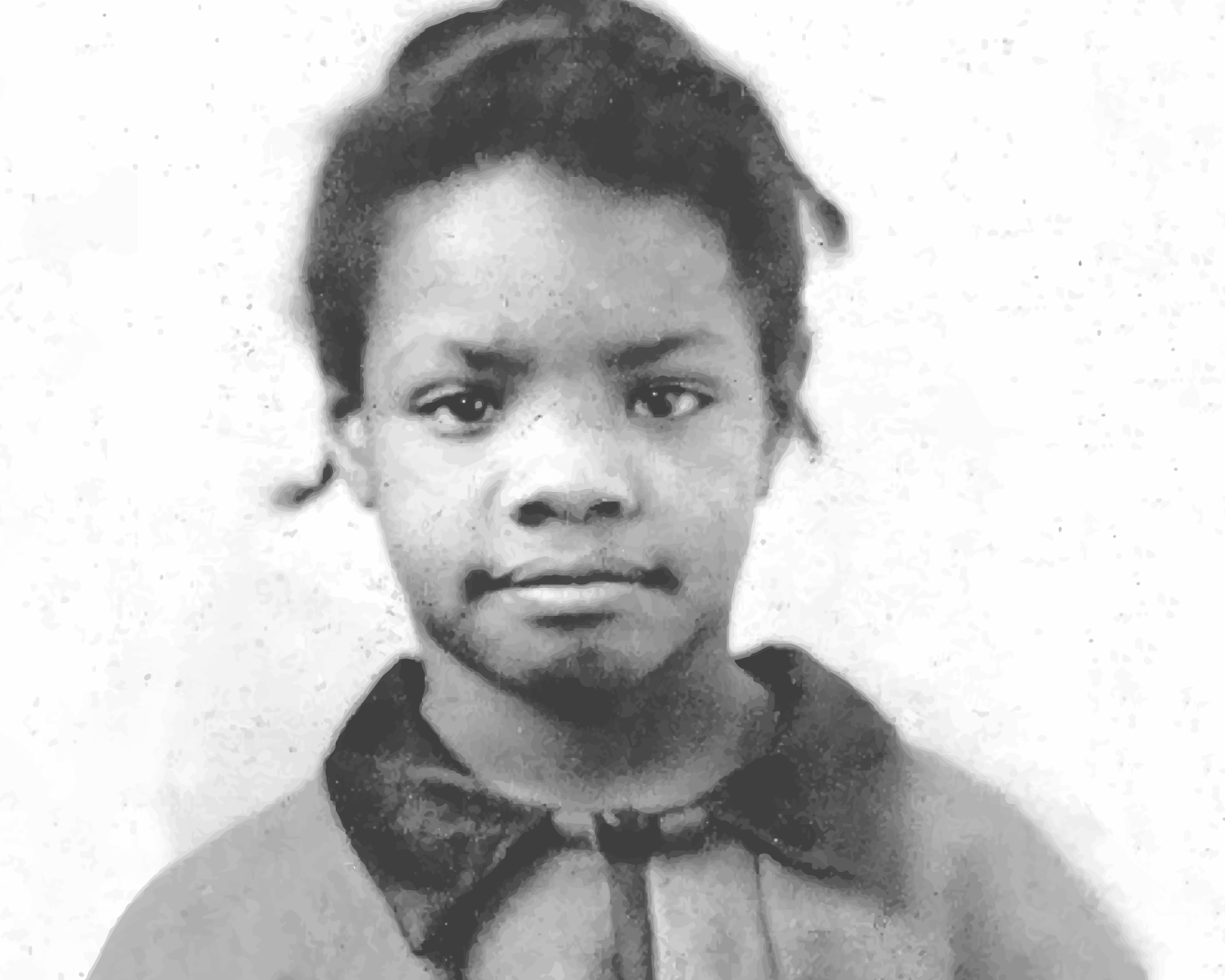
Childhood photo of Maya Angelou.
During that period, Angelou developed a deep connection to literature and language. She read widely, memorized poetry by Shakespeare and Edgar Allen Poe, and discovered the power of words through books and the encouragement of a family friend and teacher, Mrs. Bertha Flowers. This ultimately led her to find her voice again.
As a teenager, Angelou moved to Oakland, California, to live with her mother. She attended George Washington High School and took dance and drama classes on a scholarship at the California Labor School. At age 16, after dropping out of school, she became the first Black person to work as a streetcar conductor in San Francisco, overcoming racial discrimination and lying about her age to secure the job.
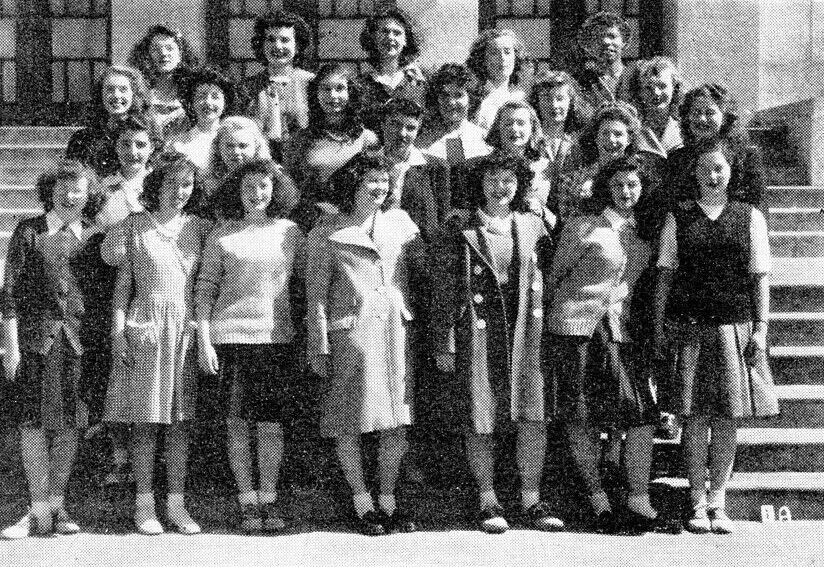
Group photograph of students, featuring Maya Angelou, from the June '45 edition of the Surveyor yearbook of George Washington High School (San Francisco). Image source: Wikimedia Commons.
In 1944, Angelou returned to George Washington High School and gave birth to her son, Clyde Bailey (Guy) Johnson, shortly after graduation. She then supported herself and her young son through a variety of jobs while pursuing opportunities in the performing arts.
From Performing Arts to Civil Rights Activism
In 1949, at age 21, Angelou married Tosh Angelos, an electrician in the US Navy. She began singing at the Purple Onion nightclub in San Francisco, and created her professional name by combining a variation of her husband’s surname with her brother’s nickname for her, Maya. She legally changed her name to Maya Angelou before the couple divorced in 1952.
Between 1954 and 1955, she toured Europe and Africa in a production of the opera Porgy and Bess sponsored by the State Department. Her travels connected her with artists, writers, and activists working for social change. The same year, she moved to New York City with her son to study modern dance. In 1957, she appeared in the off-Broadway production Calypso Heat Wave and released her first album, Miss Calypso.
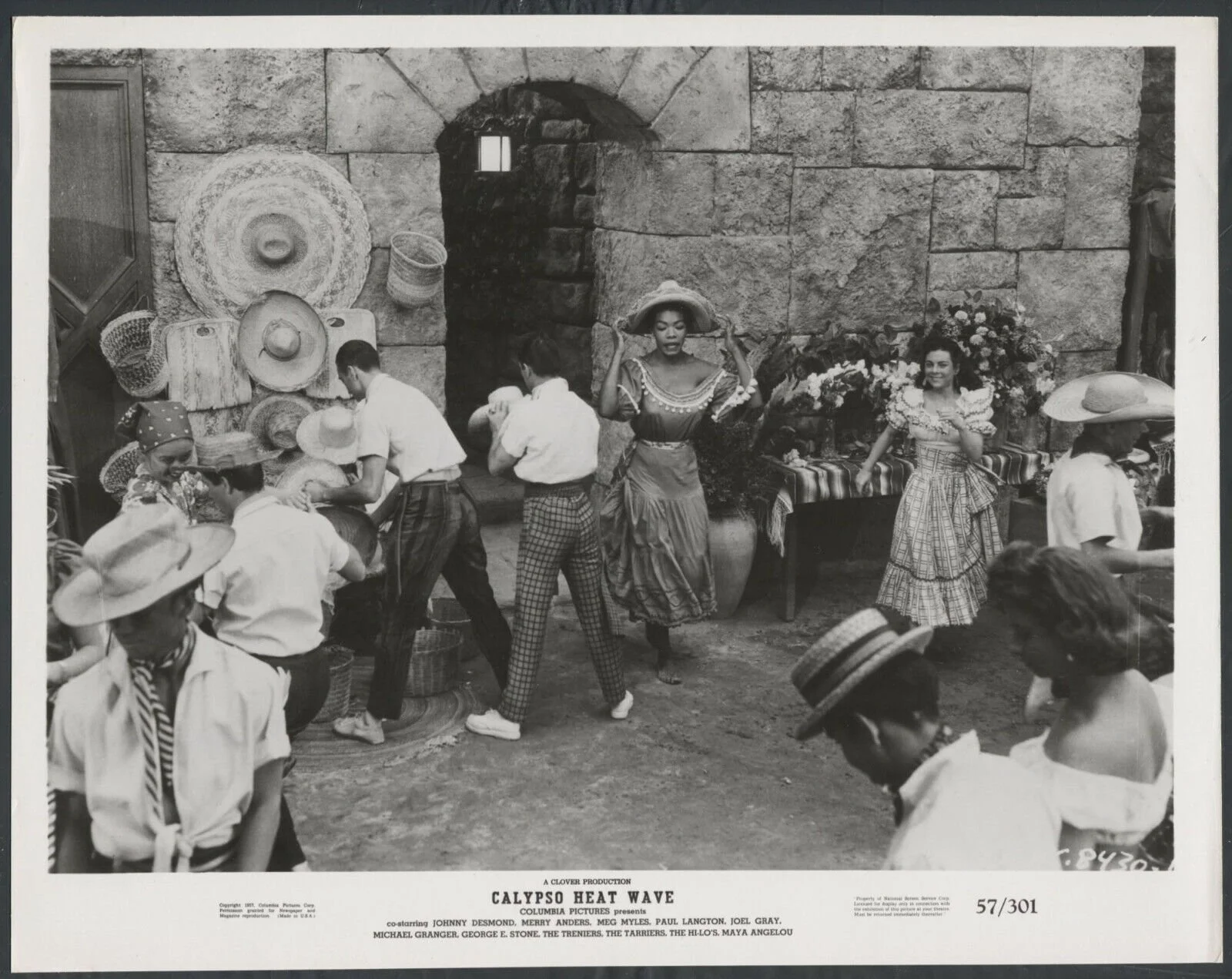
Press photo of Maya Angelou (center, wearing hat) for the 1957 film Calypso Heat Wave. Image Source: Wikimedia Commons.
In the late 1950s, Angelou joined the Harlem Writers Guild in New York City, where she connected with prominent Black writers, including James Baldwin. She also became increasingly involved in the Civil Rights Movement, working with the Southern Christian Leadership Conference (SCLC), led by Dr. Martin Luther King Jr., as its northern coordinator. Angelou also lived in Egypt and Ghana during the early 1960s, where she met and worked with Malcolm X as he developed plans for the Organization of Afro-American Unity.
Telling the Untold Stories
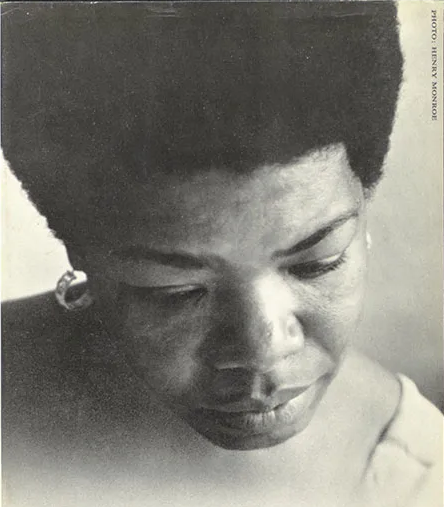
Portrait photograph of Maya Angelou by Henry Monroe from the 1969 first-edition dust jacket of ‘I Know Why the Caged Bird Sings’. Image Source: Wikimedia Commons.
Back in the United States, Angelou published the first of seven autobiographies, I Know Why the Caged Bird Sings, in 1969. Although the book was nominated for the National Book Award, many schools tried to ban it due to the depictions of abuse, racism, and sexuality. However, Angelou’s frankness and literary innovation expanded the possibilities of autobiographical writing, particularly for Black women whose experiences had often been excluded from mainstream narratives.
Angelou continued to publish poetry, essays, plays, and autobiographies throughout her career. Her writing often explored the intersections of race, gender, and resilience, giving voice to experiences that were deeply personal yet connected to broader systems of inequality. In 1972, she became the first African American woman to have a screenplay produced as a film, with Georgia, Georgia. She was later nominated for a Tony Award for her role in the play Look Away and for an Emmy for her work on the television miniseries Roots, among other honors.
In 1993, Angelou reached an especially broad audience when she read her poem On the Pulse of Morning at President Bill Clinton’s inauguration. The poem called on the nation to confront its history and work toward a more inclusive future where people recognize one another’s humanity and take responsibility for the world they share. It earned her a Grammy for Best Spoken Word Album in the same year, a win she repeated in 1995 and 2002.
A Legacy of Arts and Human Impact
Maya Angelou died on May 28, 2014, at the age of 86. Over the course of her life, she received numerous honors for her contributions to literature and public life.
President Gerald Ford appointed her to the Bicentennial Commission in 1975, President Bill Clinton awarded her the National Medal of Arts in 2000, and President Barack Obama presented her with the Presidential Medal of Freedom in 2010.
Video: Angelou receives the President Medal of Freedom.
She also received a lifetime appointment to the Reynolds Chair of American Studies at Wake Forest University in North Carolina, and was featured in a special US Postal Service stamp and US Mint quarters.
Angelou’s work across literature, theater, film, and education demonstrated how storytelling can help turn pain into power and build a deeper understanding across differences. By sharing her own experiences and amplifying the stories of the voiceless, she helped broaden public conversations about race, gender, and belonging. Her legacy reminds us that words can challenge injustice, create connection, and inspire collective action toward a more inclusive society.
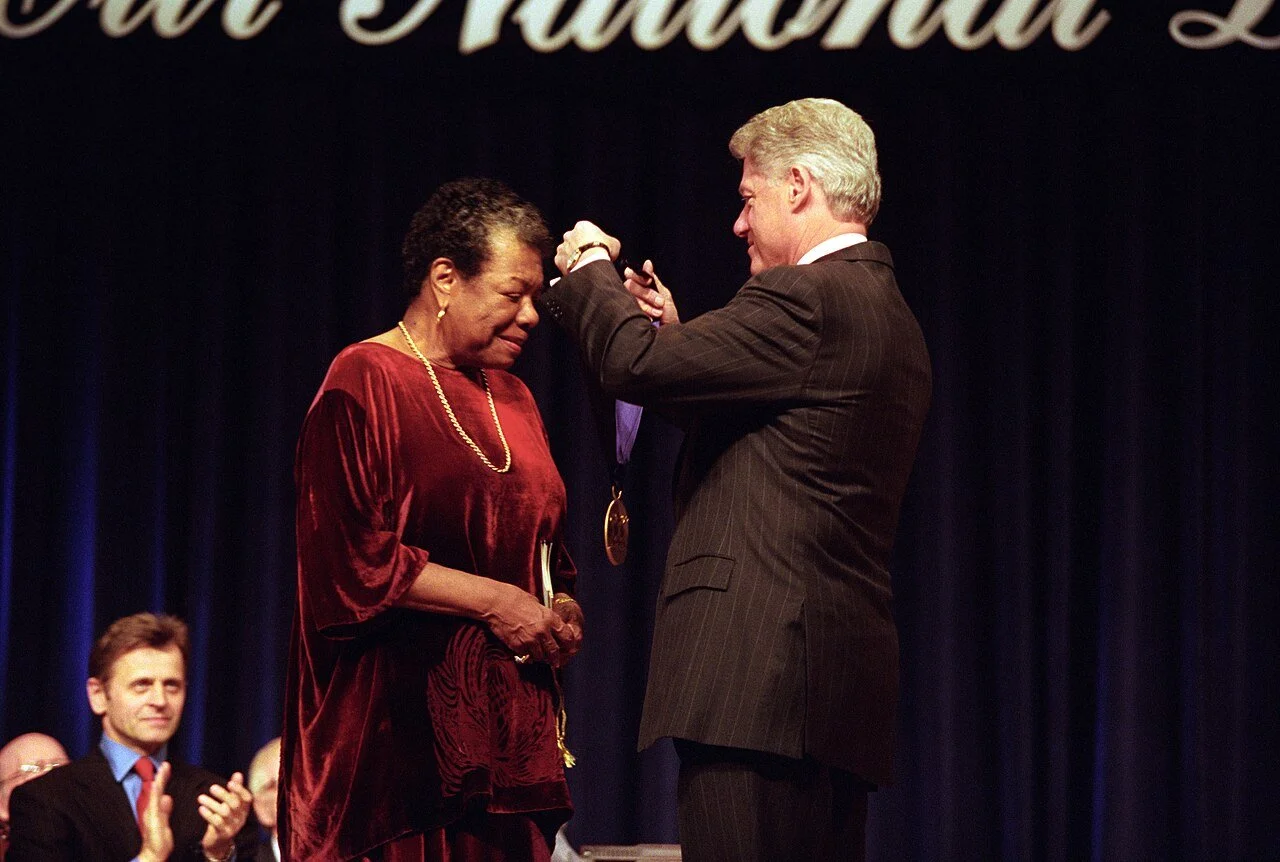
President Clinton presents the National Medal of Arts and Humanities Award to Maya Angelou, 2000. Image Source: Wikimedia Commons.
Learn More About Maya
https://www.biography.com/authors-writers/maya-angelou — Biography.com
https://www.womenshistory.org/education-resources/biographies/maya-angelou — National Women’s History Museum
https://www.mayaangelou.com/biography/ — MayaAngelou.com
https://www.arwomenshalloffame.com/maya-angelou — Arkansas Women’s Hall of Fame
https://www.poetryfoundation.org/poets/maya-angelou — Poetry Foundation
Call to Action
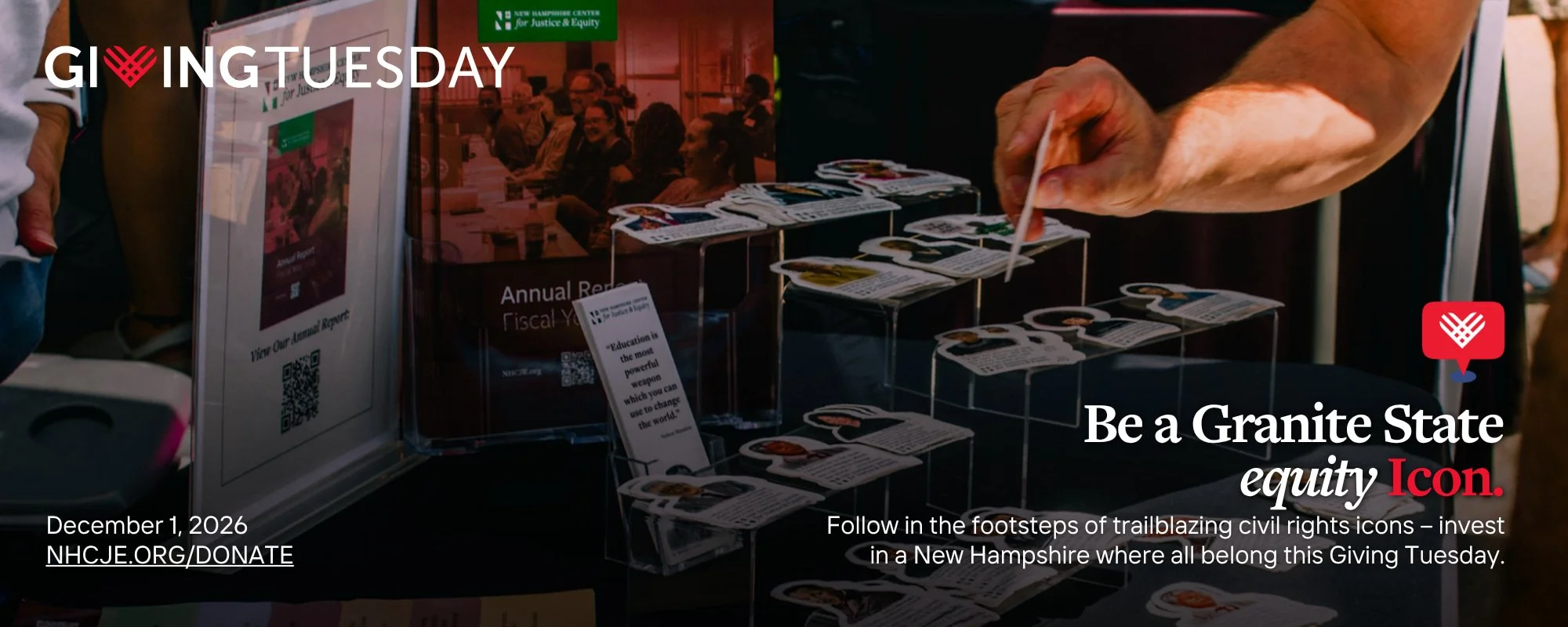


The work of advancing justice didn't begin with us, and it won't end with us. Building on the legacies of our Icons and all other advocates for justice who came before us, we invite you to help carry this work forward by investing in NHCJE this Giving Tuesday.
Learn more about NHCJE’s Icon Series