
Policy Recommendations
The recommendations were developed following the killing of Nickenley Turenne in late 2025 and the New Hampshire Attorney General’s Office’s subsequent decision not to prosecute the officers involved.
-
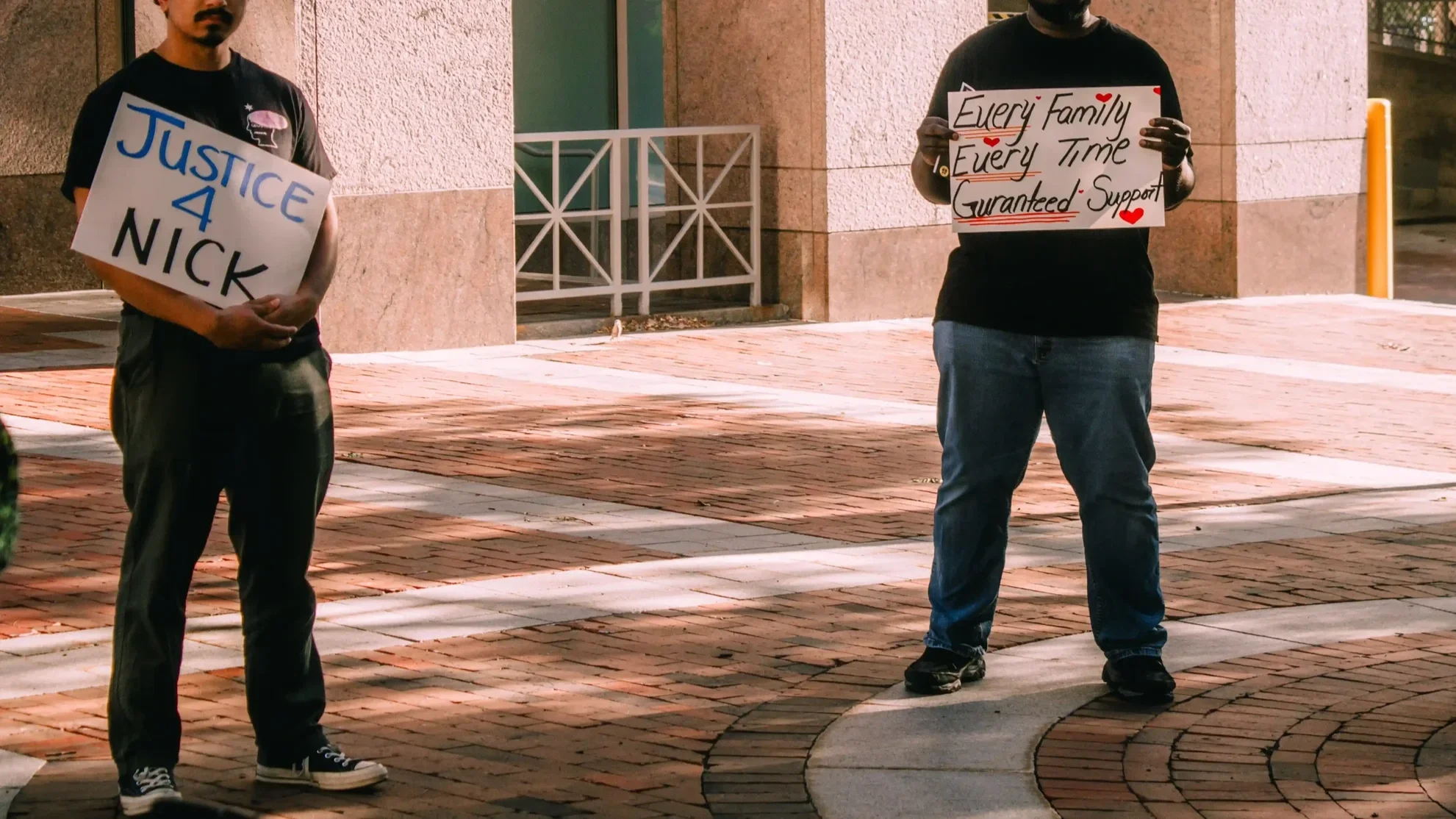
Guaranteed victim and family advocates for every family impacted by a police-involved shooting to ensure transparency, communication, and meaningful support throughout the investigative process. Some states provide victim advocates to support individuals and families affected by police-involved shootings; however, New Hampshire is not one of them. This type of victim and family support is typically provided by the state’s attorney general’s office, local prosecutor's office, or local law enforcement agencies.
-
Modification of the Manchester Police Department's Five-Day Return to Duty Policy following officer-involved shootings. The Manchester Police Department’s Five-Day Return to Duty Policy is inadequate by modern standards. The International Association of Chief of Policy guidelines and contemporary best practice lean heavily towards longer pauses paired with mandatory psychological evaluations and phased transition back to duty.
The Coalition recommends the Manchester Police Department model their Return to Duty Policy from the NH State Police’s Policy. State police policy requires officers involved in police involved shootings to take 30 days of leave after such an incident and not return to “active duty” until the investigation into the shooting has been completed.
-
Continued review and strengthening of police training related to implicit bias, de-escalation, communication, mental health response, and decision-making under stress. In July 2025, New Hampshire’s Legislature passed HB2, which included a ban on the use of state funds for DEI-related activities, including New Hampshire Police Standards and Training’s required implicit bias trainings. Although a federal judge in late 2025 issued a preliminary injunction on HB2’s DEI Ban and NH’s Police Standards and Training is not prohibited from providing implicit bias training(s), Director Scippa reports that such training is no longer required and alternative offerings are provided.
ABOUT THESE REFORMS
The NH Collective Power Coalition continues to mourn the loss of Nickenley Turenne at the hands of Manchester Police in the early morning hours of December 6, 2025. Although the NH State Attorney General’s Office chose not to prosecute the officers involved in the shooting of Nickenley, the community remains deeply troubled by several aspects of this case, and we believe that Nickenley’s life mattered and that his death was preventable.
The concerns for the safety and well-being of our communities culminated in a series of mutually reinforcing policy recommendations brought forward by the Coalition.
These recommendations are consistent with the Commission on Accreditation for Law Enforcement Agencies’ (CALEA) standards. We believe that, when fully implemented, they will help ensure every Granite Stater returns home safely, including those sworn to protect and serve, while rebuilding trust and transparency between law enforcement and rural and urban communities across New Hampshire.

6 Policy Reforms for NH Law Enforcement
-
-
Adoption of a universal statewide use of force policy that prioritizes de-escalation, proportionality, and preservation of life. In several states, the Attorney General has established a singular, uniform use-of-force policy that legally applies to every law enforcement agency within their respective state. Examples include New Jersey, Washington State, and Vermont.
Learn more: read NHCJE’s blog on a statewide universal use of force policy.
-
Consistent statewide implementation and funding of crisis response, co-response models, and behavioral health partnerships to ensure mental health professionals play a central role in crisis response whenever possible. Generally speaking, New Hampshire has a strong foundation in Mobile Crisis Response Teams (MCRT), but the system faces adequacy issues, particularly regarding wait times for in-person mobile units or limited hours. NH’s crisis response network functions primarily through two avenues: Mobile Crisis Response Teams, including limited community-based Co-Responder Programs (i.e., Colorado), where law enforcement and mental health clinicians respond together, and Police Training Programs. Organizations like NAMI NH (National Alliance on Mental Illness) provide 40-hour Crisis Intervention Team (CIT) training courses across the state for police, fire, and EMS. These programs teach officers how to safely recognize a mental health crisis, de-escalate it, and connect individuals with proper treatment, emphasizing the need for supporting first responder behavioral health and wellness.
Learn more about crisis response and behavioral health partnerships in this NHCJE blog article.
Advocacy
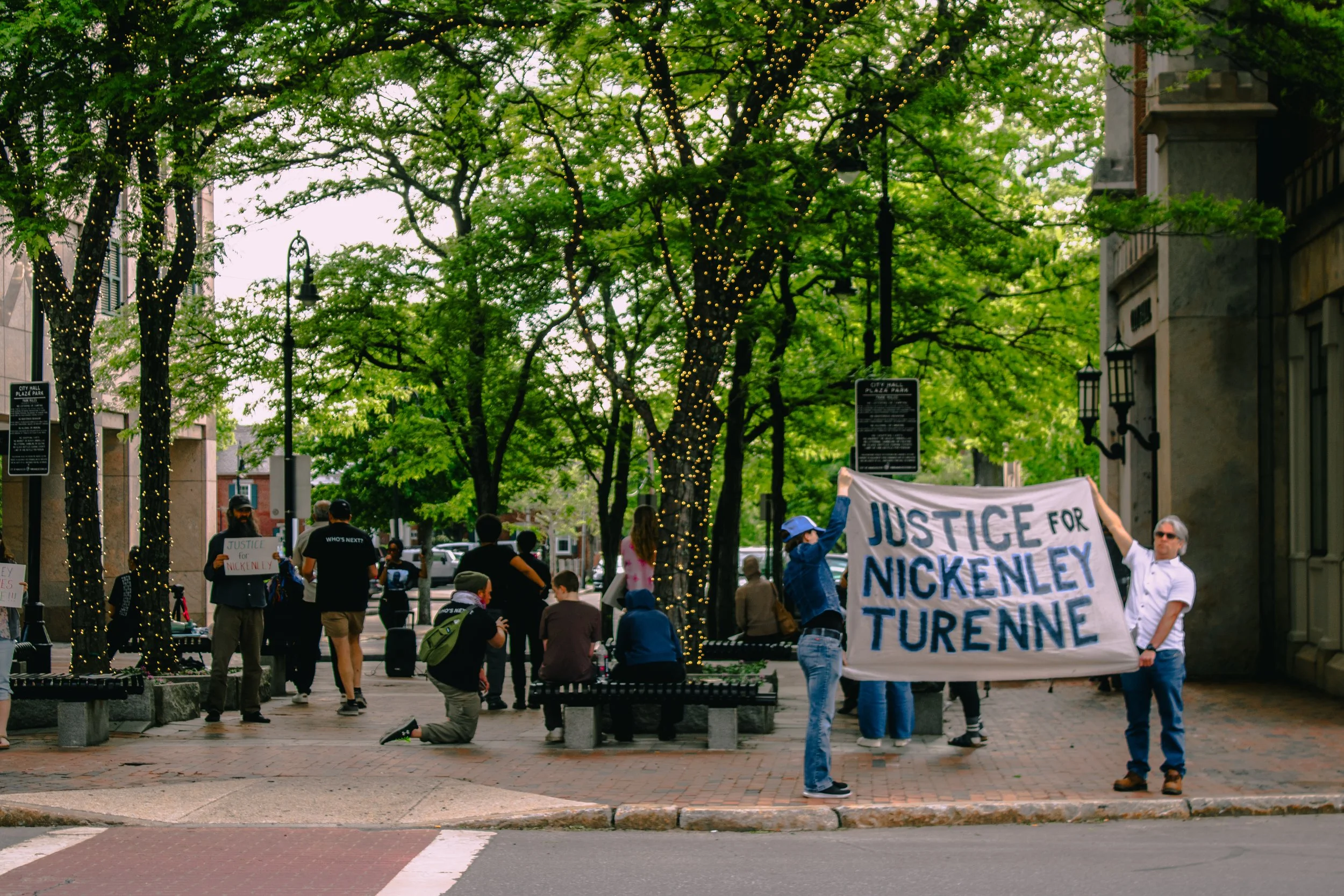
Learn more about how the Coalition, its member organizations, and our partners are advocating around the policy recommendations.
Listen to BLM NH’s Podcast Episodes: ‘Who Responds When the Crisis is Not a Crime?’
This panel explores the multifaceted concept of public safety, emphasizing community trust, mental health, social work, and policy reform. Experts from law enforcement, social work, and advocacy share insights on improving safety and trust through systemic changes.
Featuring Anthony Poore, Executive Director at NHCJE, Kaitlin Jones, Police Social Worker at Dover Police Department, and Elliot Moya, Chief of Police at Eliot Police Department.
In Part 2 of “Who Responds When the Crisis Is Not a Crime?”, we dig deeper into what happens when someone is experiencing a crisis and the response they need isn’t punishment, policing, or incarceration. What does real community safety look like when we lead with care? Who should be responding to mental health crises, substance use, housing instability, and other moments of vulnerability? And what would it take to build systems that actually meet people where they are?
Read NHCJE’s Blog Series on the Policy Recommendations:


Statements
Statements issued by the Coalition and our partners.
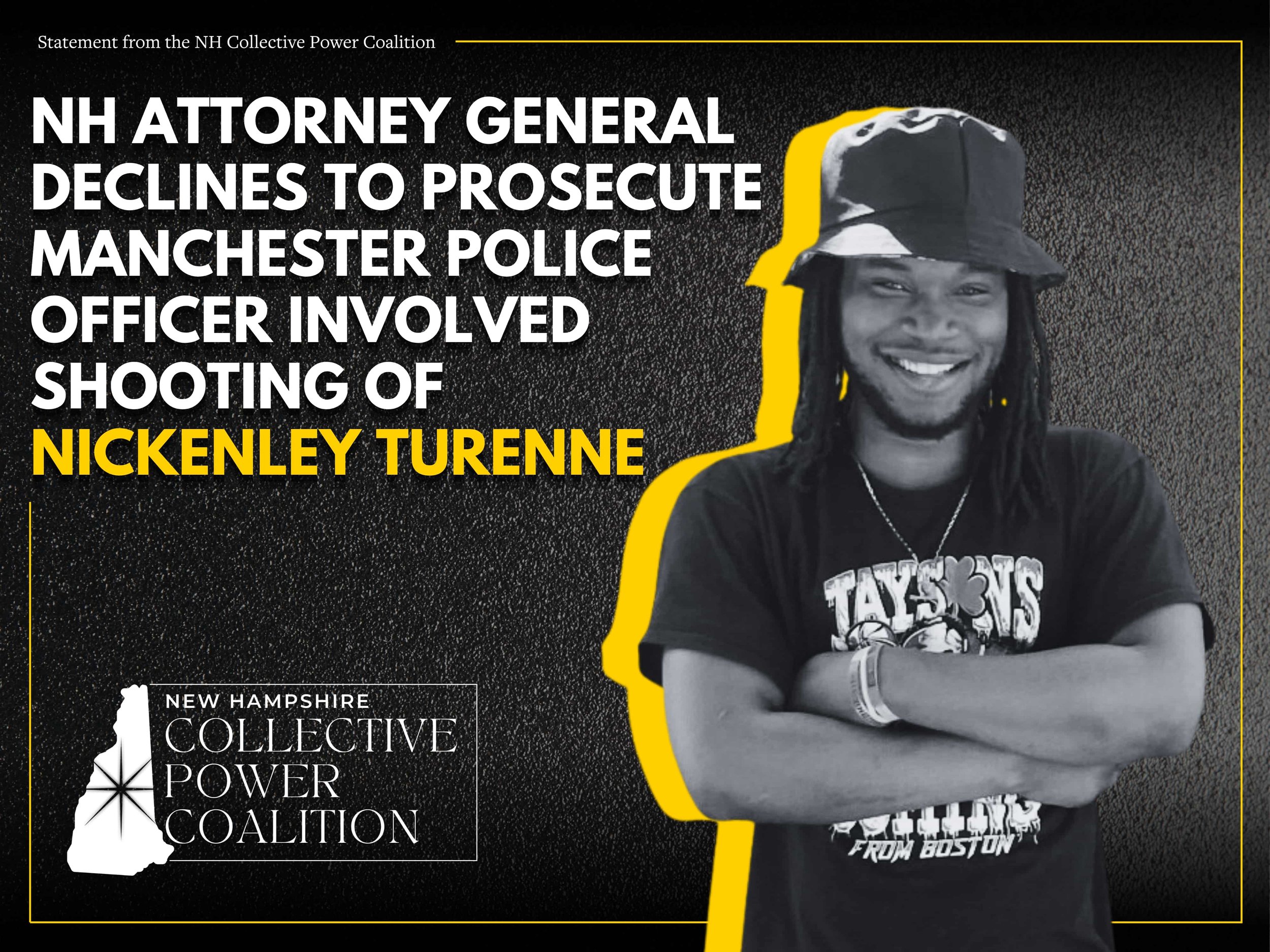
New Hampshire Attorney General Declines to Prosecute Manchester Police Officer Involved Shooting of Nickenley Turenne
July 2026
On Wednesday, July 1, members of the New Hampshire Collective Power Coalition met with representatives from the New Hampshire Attorney General's Office and the Department of Justice to review the findings of the investigation into the December 6, 2025 killing of Nickenley Turenne by Manchester Police officers.
During that meeting, coalition members viewed the body-worn camera footage, reviewed the complete 52-page investigative report, and were informed that the Attorney General has determined no criminal charges will be filed against the officers involved. The Attorney General concluded that the officers' use of deadly force was legally justified under New Hampshire law (RSA 627:4, IIA & RSA627:5, IIA) because they reasonably believed Mr. Turenne posed an imminent threat.
On July 2, the NH Collective Power Coalition issued a response to the Attorney General’s disposition. ⟶
“We recognize that this legal standard establishes a high threshold for criminal prosecution of police officers. We also recognize that every person deserves to return home safely, including members of the public and those sworn to protect them. The responsibility of law enforcement is not only to protect themselves, but to preserve human life whenever reasonably possible. That responsibility requires the use of the least amount of force necessary and every reasonable effort to de-escalate situations before resorting to deadly force.”
Previous Statements
Public Statement Calling for Timely Release of Investigative Findings from NH Attorney General's Office
June 2026
Public Statement from the NH Collective Power Coalition on the Killing of Nickenley Turenne
February 2026
Joint Statement from BLM-NH & NHCJE Regarding the Killing of Nickenley Turenne
December 2025