Protecting Life Through a Statewide Use-of-Force Policy in New Hampshire
This article is part of a series examining NHCJE’s and the NH Collective Power Coalition’s six policy reforms for law enforcement in New Hampshire. The recommendations were developed following the killing of Nickenley Turenne in late 2025 and the New Hampshire Attorney General’s Office’s subsequent decision not to prosecute the officers involved.
When a police officer responds to a crisis, the decisions made in the first few moments can determine how an encounter unfolds. Clear rules can help officers determine when force is justified, when to seek alternatives, and when to stop using force.
The New Hampshire Center for Justice and Equity (NHCJE) and the NH Collective Power Coalition recommend a universal statewide policy that prioritizes de-escalation, proportionality, and the preservation of life. A consistent framework across state, county, and local agencies, along with the training to recognize when a situation can be de-escalated, would give officers clear guidance, strengthen accountability, and help the public understand the rules governing police conduct.
Making De-Escalation the First Response
De-escalation is a central component of a life-preserving use-of-force policy. Rather than treating force as the default response to resistance or noncompliance, when officers take reasonable steps to de-escalate situations and resolve them without physical confrontation, whenever possible, outcomes are better for everyone.
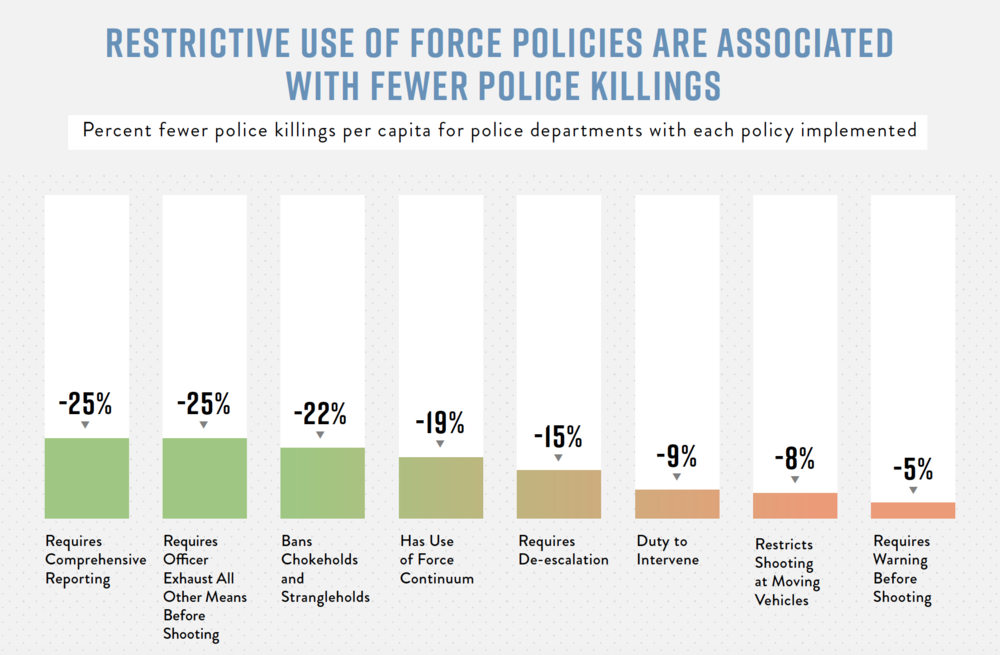
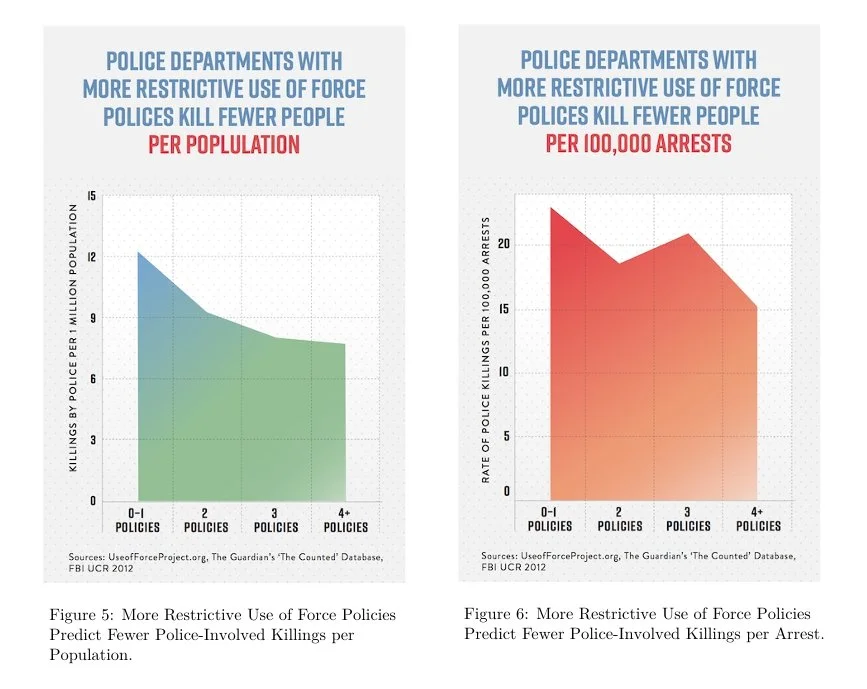
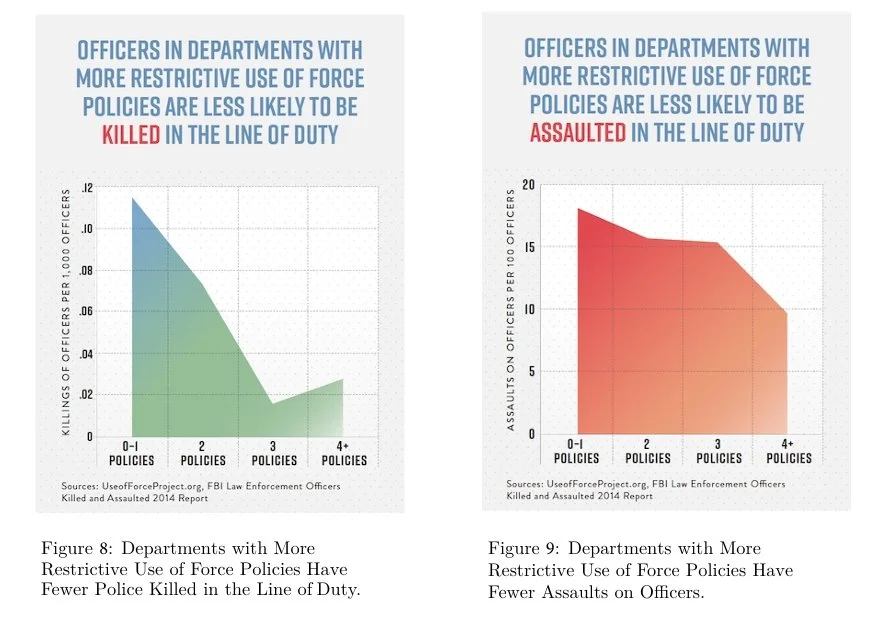
Campaign Zero's 'Use of Force Project' analyzed data from various cities on use of force policies, police killings per capita, and other metrics examining police violence. The resulting correlational study demonstrates a strong correlation between restrictive use of force policies and fewer police-involved deaths, supporting that restrictive use of force policies are a promising, evidence-based first step in reducing police violence.
Scott Meadors, a retired police captain from Stockton, California, has spent much of his career working on police training, procedural justice, and building community trust. He has also helped develop implicit bias training for law enforcement, which he has brought to hundreds of law enforcement and judicial staff in New Hampshire.
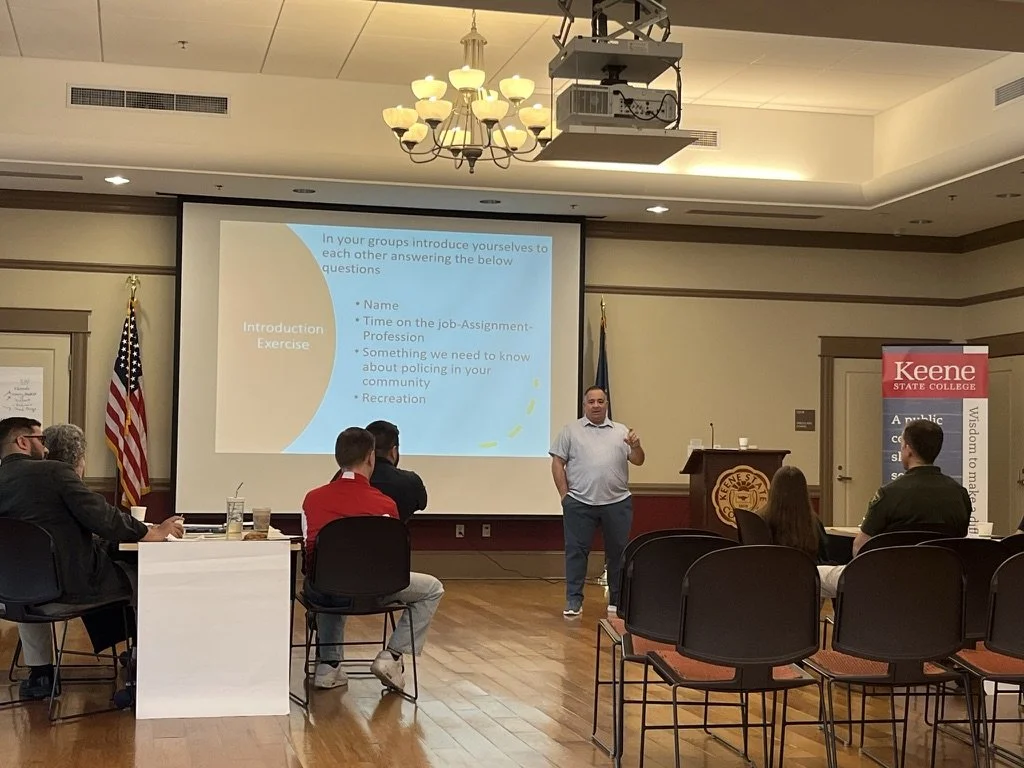
In partnership with NHCJE, Scott Meadors facilitates an Implicit Bias & De-Escalation Training at Keene State. Learn more.
Meadors emphasizes the importance of giving officers time to assess a situation. One practical approach involves using time, distance, and cover to create space, reduce immediate pressure, and allow more time for decision-making. “The idea is to slow down the situation,” he explained. “Anything we can do to make sure that the wrong decision isn't made can make a difference.”
A statewide policy could make de-escalation an affirmative responsibility, requiring officers to consider additional context, including if a person’s behavior might be related to a disability, medical condition, mental health crisis, substance use, or language barrier. Someone who does not follow an instruction may be unable to comply rather than deliberately resisting.
Training and alternative response models can also help officers recognize when a situation calls for a different approach. NHCJE has previously examined Crisis Intervention Team (CIT) training and Police Social Work, which can help officers respond to people experiencing a mental health crisis and connect them with appropriate support. As a person’s behavior changes or a threat diminishes, officers should reassess their response and reduce or stop using force when it is no longer necessary.
“The idea is to slow down the situation. Anything we can do to make sure that the wrong decision isn’t made can make a difference.”
Establishing Clear Limits on Deadly Force
Preserving life also requires clear standards for when lethal action is justified, with deadly force reserved for situations in which it is strictly necessary to address an imminent threat of death or serious bodily injury.
Existing recommendations around use-of-force call for restrictions on using deadly force against someone who poses a threat only to property or to themselves. They also prohibit dangerous tactics, including chokeholds, carotid restraints, and strikes to the head or neck, except where deadly force is legally authorized, as well as strict limits on firing at moving vehicles or into crowds.
Having such statewide rules in place would help reduce ambiguity in high-pressure situations. Consistent standards would also make it easier for agencies across the state to train officers around the same expectations. Scenario-based exercises could help officers practice responding to rapidly changing situations, including encounters involving people in crisis.
Creating a Duty to Intervene
A statewide policy should also establish clear responsibilities for officers who witness another officer using excessive or unlawful force. Under a duty to intervene, officers must take reasonable action to stop misconduct, regardless of rank or seniority. This is already in place for federal law enforcement agencies, and while it doesn’t extend to state or local police departments, it can serve as an example.
Meadors identified intervention as an important safeguard against excessive force. “We want an environment in which the fellow officers step in and intervene before it ever gets to this point,” he said.
Preventing unnecessary harm and accountability are shared responsibilities, and beyond written policy, fulfilling this duty requires regular training, clear communication, and leadership that reinforces officers’ responsibility to intervene when they witness misconduct.
“We want an environment in which the fellow officers step in and intervene before it ever gets to this point.”
Making Accountability Everyday Practice
Clear standards are only effective if agencies ensure implementation and continually review them, including documenting incidents, reviewing their decisions, and addressing violations. A statewide system for documenting and reviewing use-of-force incidents would help identify recurring problems, assess compliance, and ensure violations have consequences. Consistent with previous policy recommendations, the NH Law Enforcement Accreditation Commission is the appropriate oversight agency to collect and document such incidents. Public reporting would allow residents, policymakers, and law enforcement leaders to better understand how force is used across the state and identify opportunities for improvement.
Training is another essential part of implementation. During his time with the Stockton Police Department, Meadors helped integrate procedural justice, implicit bias awareness, and community trust-building into officer training, performance evaluations, and promotion criteria. The department also brought officers and community members together for structured conversations about how encounters with law enforcement affect people's lives.
Meadors highlighted that this work requires an ongoing commitment, rather than a one-time response to a critical incident. “The goal is to reinforce these principles over time, ensuring officers apply them in their everyday interactions, not just during training exercises,” he explained.
“The goal is to reinforce these principles over time, ensuring officers apply them in their everyday interactions, not just during training exercises.”
What New Hampshire Can Learn From Other States
New Jersey, Vermont, and Washington state offer models for how New Hampshire can establish consistent statewide use-of-force standards while allowing agencies to adapt policies to local needs.
In New Jersey, the Attorney General's statewide policy sets requirements for all state, county, and local law enforcement agencies. It establishes requirements for de-escalation, limits on deadly force, intervention when officers witness excessive force, and medical assistance following use-of-force incidents.
New Jersey also pairs its policy with mandatory training and statewide reporting. Officers must report use-of-force incidents to a centralized system, and the state publishes data through a public dashboard. These measures help agencies and the public examine how force is used and identify disparities that may require attention.
In Vermont, a statewide use-of-force policy was adopted alongside statutory standards governing when force may be used. State law requires force to be objectively reasonable, necessary, and proportional, and establishes restrictions on deadly force.
Washington’s model policy offers another useful example. State law requires law enforcement agencies to adopt a use-of-force policy consistent with the Attorney General’s model policy or explain how an alternative policy complies with state law. The framework emphasizes de-escalation, the use of only necessary and proportional force, and the preservation of human life. Washington also requires officers to intervene when they witness excessive force and to provide aid to injured people.
Establishing a Consistent Standard Across New Hampshire
A statewide use-of-force policy would give New Hampshire a shared framework for when officers should use force, how they should attempt to de-escalate encounters, and what responsibilities they have when force is used. Clear standards, sustained training, incident reporting, community engagement, and meaningful oversight would help translate the goal of preserving life into everyday law enforcement practice.
The policy’s effectiveness would ultimately depend on implementation: whether agencies follow the standards, leaders reinforce them, and incidents are reviewed transparently. Establishing a common policy would be an important step toward making those expectations clear across the state.
This article is part of a series examining NHCJE’s and the NH Collective Power Coalition’s six policy reforms for law enforcement in New Hampshire. Read more:


Other Research:
Campaign Zero - Solutions — Campaign Zero - a nationwide policy reform organization and research platform whose mission is to redefine public safety and end police violence.
#8CantWait - 8 Can't Wait - an initiative of Campaign Zero that grew out of the ‘Use of Force Project’. It is a campaign to bring immediate change to police departments through 8 specific use-of-force polices.
Mapping Police Violence - Mapping Police Violence - a research collaborative and public database that tracks, verifies, and publishes data on police killings across the U.S., analyzing the impact of police violence on communities.
Police Data Archive - Police Use of Force Data & Statistics | PoliceData.org - tracked over one million cases of police use of force across more than 3,000 jurisdictions in the U.S.
About Scott Meadors

Scott Meadors is a law enforcement professional with 29 years of experience at the Stockton Police Department in California, where he rose from patrol officer to captain, leading field operations, investigations, and special operations. From 2014 to 2019, he led the department’s participation in the National Initiative for Building Community Trust and Justice, focusing on procedural justice, implicit bias, and community trust-building. In 2019, he received a California POST Excellence in Training award for his contributions. Today, he trains law enforcement professionals and community members nationwide and facilitates workshops to strengthen trust between police and the communities they serve.