
For many people, navigating a new community means learning where to find information, how to access services, and who to turn to when they need help. For immigrants, New Americans, and other communities facing language, cultural, financial, or other barriers, that process can be especially challenging. Community organizations like Community Engagement Training Center (CETC), with offices in Nashua and Manchester, play an important role in bridging those gaps.
Founded by Angela Mercado in 2023, the organization connects residents with resources including housing, education, financial literacy, health, and small business support, while also providing training designed to help people build the knowledge and confidence to bring the same support to their communities.
The New Hampshire Center for Justice & Equity (NHCJE) spoke with Angela Mercado about her experience serving New Hampshire communities, the importance of language access and trusted relationships, and her vision for building stronger communities through connection, education, and leadership.
Three Decades of Helping Immigrant Families
When Mercado moved to New Hampshire nearly three decades ago, she quickly noticed how difficult it could be for families who did not speak English to navigate schools and other systems. After dropping her own children off at school, Mercado would often stay to help other parents with interpretation and translation.

Image Source: NHCETC.org.
What started as informal volunteering became a 10-year commitment to supporting children and families in the Nashua school district, followed by years working for nonprofits and eventually 17 years working within the school district itself. Along the way, Mercado provided interpretation, outreach, and support to families navigating schools, health care, immigration, and other services.
Over time, Mercado saw a recurring need: families often knew they needed help but did not know where to find it or how to access the systems designed to provide it. In 2023, she decided to create the Community Engagement Training Center (CETC) as a place where people could come for information, referrals, and support. The name reflects an important part of her vision.
“I wanted to create a place where people could come to get information, make connections, and find the support they need,” Mercado said. “But I also want people to learn, because once they have that knowledge, they can share it with others and become leaders within their own community.”
“I wanted to create a place where people could come to get information, make connections, and find the support they need. But I also want people to learn, because once they have that knowledge, they can share it with others and become leaders within their own community.”
Connecting People to Resources and Building Leadership
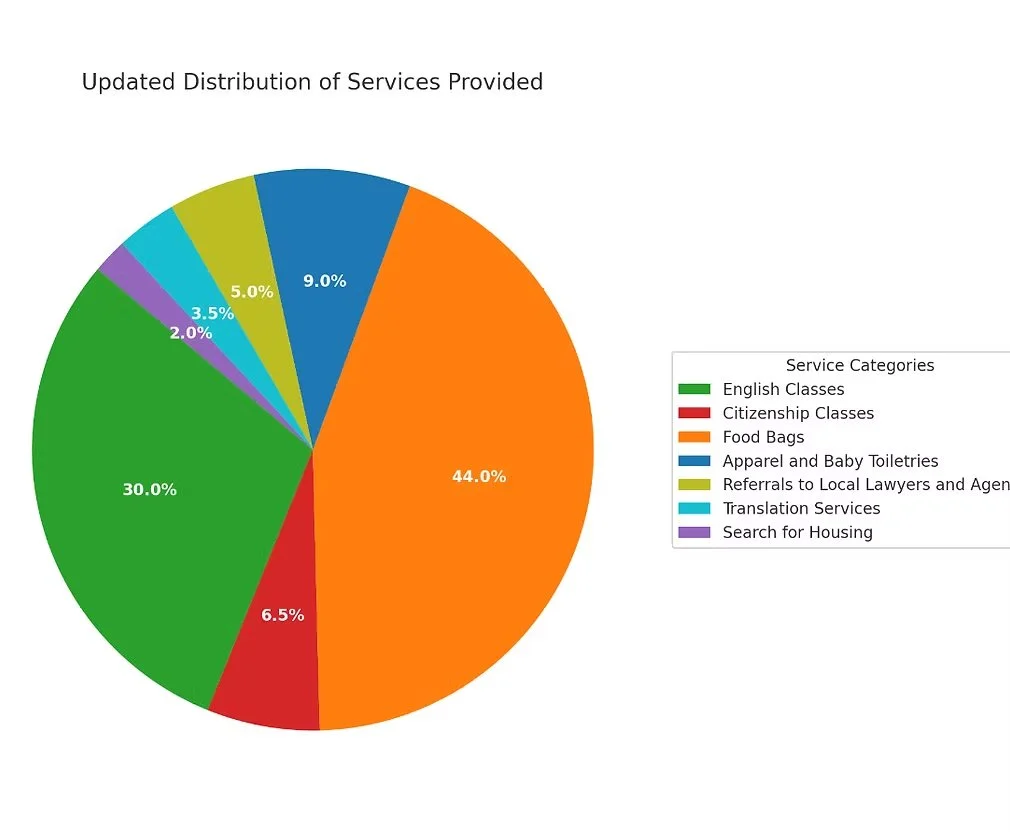
Initiatives provided by CETC. Image Source: NHCETC.org.
CETC helps people connect with organizations that can provide assistance, including housing, SNAP, Medicaid, English classes, citizenship support, financial services, small business development, and other community resources. In cases where people were denied a service and don’t understand why, CETC also gives them a place to understand their options and determine their next steps.
But Mercado's goal goes beyond making referrals. She wants people to develop the knowledge and skills to navigate systems independently and help their family, neighbors, and communities do the same.
That is where CETC's training programs come in. Over the past two and a half years, Mercado has organized training in areas including CPR, first aid, online literacy, financial literacy, child care, and entrepreneurship. The center has held approximately 12 six-week training cohorts and trained over 150 people.
Through partnerships with banks and other organizations, CETC helps community members understand credit, bank accounts, loans, and other financial systems. Aspiring entrepreneurs can also be connected with economic development organizations and lending resources.

Emily Mercado (right), Angela Mercado’s daughter, who is an English and citizenship teacher at CETC, provides instruction during a childcare course session from one of CETC’s training programs. Image Source: Gabriela Lozada/NHPR.
Language Access Still Matters
While Mercado has seen progress during her years in New Hampshire, including more bilingual staff in schools and health clinics, language access remains an ongoing need, particularly when people are navigating complex systems involving health care, education, housing, government benefits, or immigration.
Although Mercado’s background as an Ecuadorian immigrant informs CETC’s mission, the organization serves people from many backgrounds, including Latino, Black, Afghan, refugee, and other communities. “I assist anyone who comes in through my door,” she said. “And if I don't speak the language, I'll find an interpreter.”
An NHCJE brief examining U.S. Census data found that roughly 8% of the state’s population speaks a language other than English at home, including Spanish, French, Chinese, Russian, Polish, German, Arabic, Vietnamese, and other languages spoken across the state. The brief also found that more than 60% of people who speak a language other than English at home also speak English “very well,” suggesting that the state has a significant pool of residents with multilingual skills.
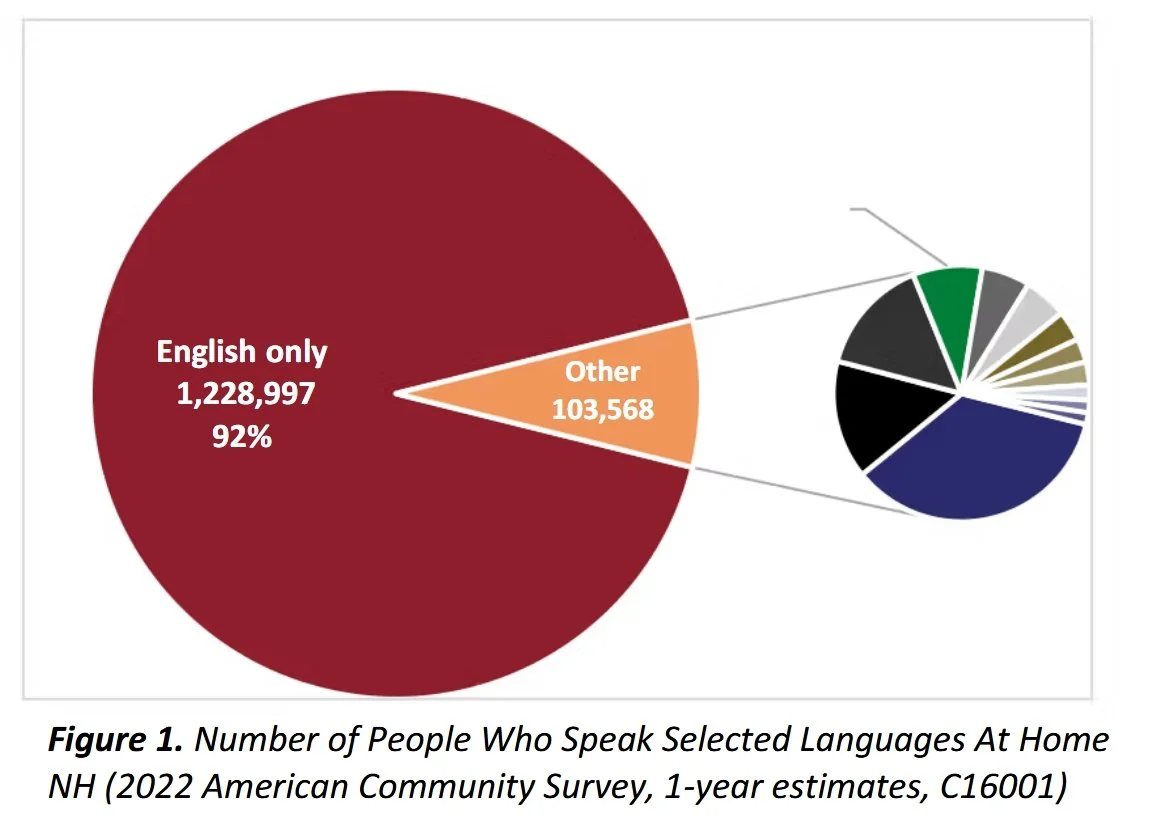
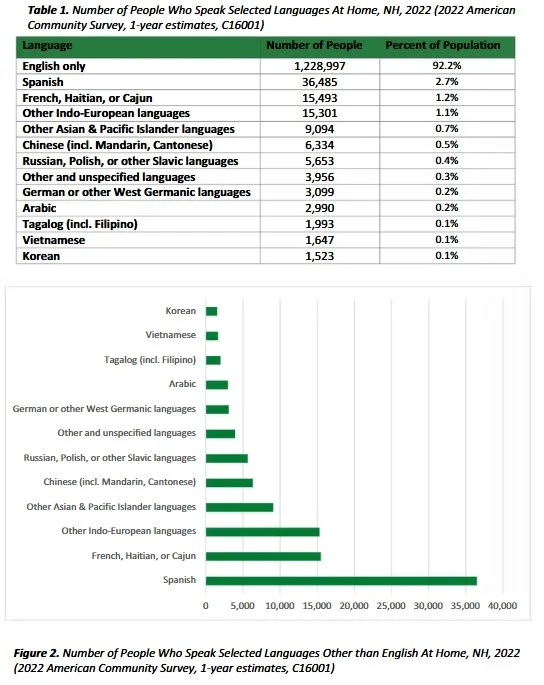
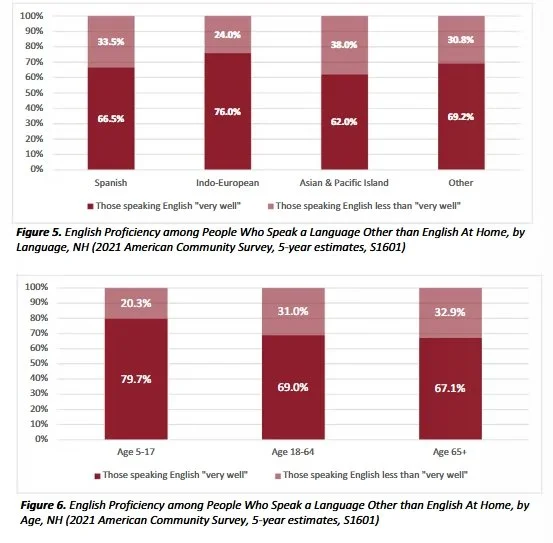
People who speak multiple languages can help businesses and organizations communicate with the communities they serve, build trust, and make information and services more accessible. That perspective takes on added importance in the current policy environment, as policies governing language access in federally funded programs change.
In March 2025, when President Trump designated English as the official language of the United States, that revoked an Executive Order from 2000 that required federal agencies and federally funded organizations to provide language assistance and translation services for people with limited English proficiency.
Policy analysts, community advocates, and legal organizations have raised civil rights concerns about these changes, arguing that reduced language-access requirements could create additional barriers for non-native English speakers seeking essential public health, safety, and social services. Combined with reductions in federal staffing and funding, the changes could also affect agencies’ capacity to provide language assistance where it remains necessary.
Mercado sees the issue play out in practical terms. If a parent cannot understand school communications, a patient cannot communicate effectively with a health care provider, or a family does not understand why an application was denied, access to the service is blocked or incomplete. Language access means making sure people understand their options, know where to turn, and can participate fully in their communities.
“I assist anyone who comes in through my door. And if I don’t speak the language, I’ll find an interpreter.”
When Fear Becomes Another Barrier
Accessing services is only part of the challenge. People also need to feel confident that they can get help without putting themselves or their families at risk. For some of the immigrant communities that Mercado serves, fear and uncertainty have become barriers of their own.
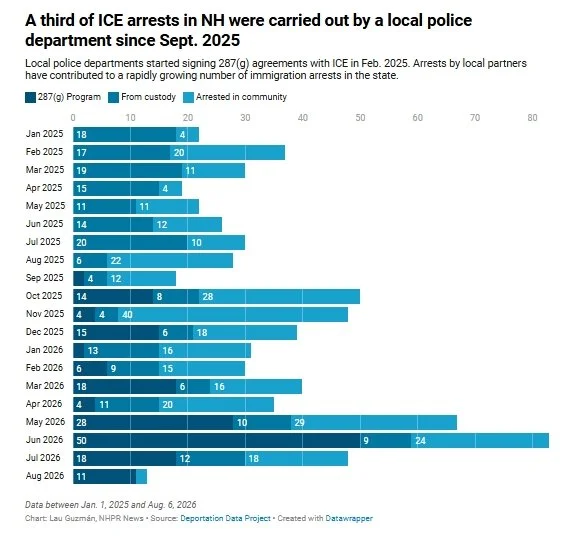
Source: ‘NH police departments contributing to surge in ICE arrests’, NHPR.
These concerns follow increased immigration enforcement activity in New Hampshire. In September 2026, NHPR reported that more than 700 people had been detained in New Hampshire since the beginning of the second Trump administration and that local law enforcement agencies were responsible for nearly half of the 198 people detained between May and July 2026.
For Mercado, the effects of that hostile environment are visible. “I see people who I know qualify decide not to apply because they are afraid of providing information to a government agency,” she said.
“I see people who I know qualify decide not to apply because they are afraid of providing information to a government agency.”
Building Trust, One Connection at a Time
Despite these ongoing challenges, Mercado remains focused on what she can do: show up, listen, and make sure no one who walks through her door leaves without a next step. For her, trust grows through consistent, personal relationships, and it multiplies when people learn the skills to help others navigate similar challenges.
Education is central to how she sees the path forward. Mercado went to college in her 30’s, after her fourth daughter was born, and she encourages other adults, especially those who don't yet speak English, to keep learning.
As New Hampshire's communities continue to grow and change, organizations like CETC show what it looks like to meet people where they are. Language access, trust-building, and community leadership are all parts of the same effort: making sure everyone who calls New Hampshire home can find a support network, understand their options, and fully participate in their community’s life.
Learn more about CETC:
About Angela Mercado
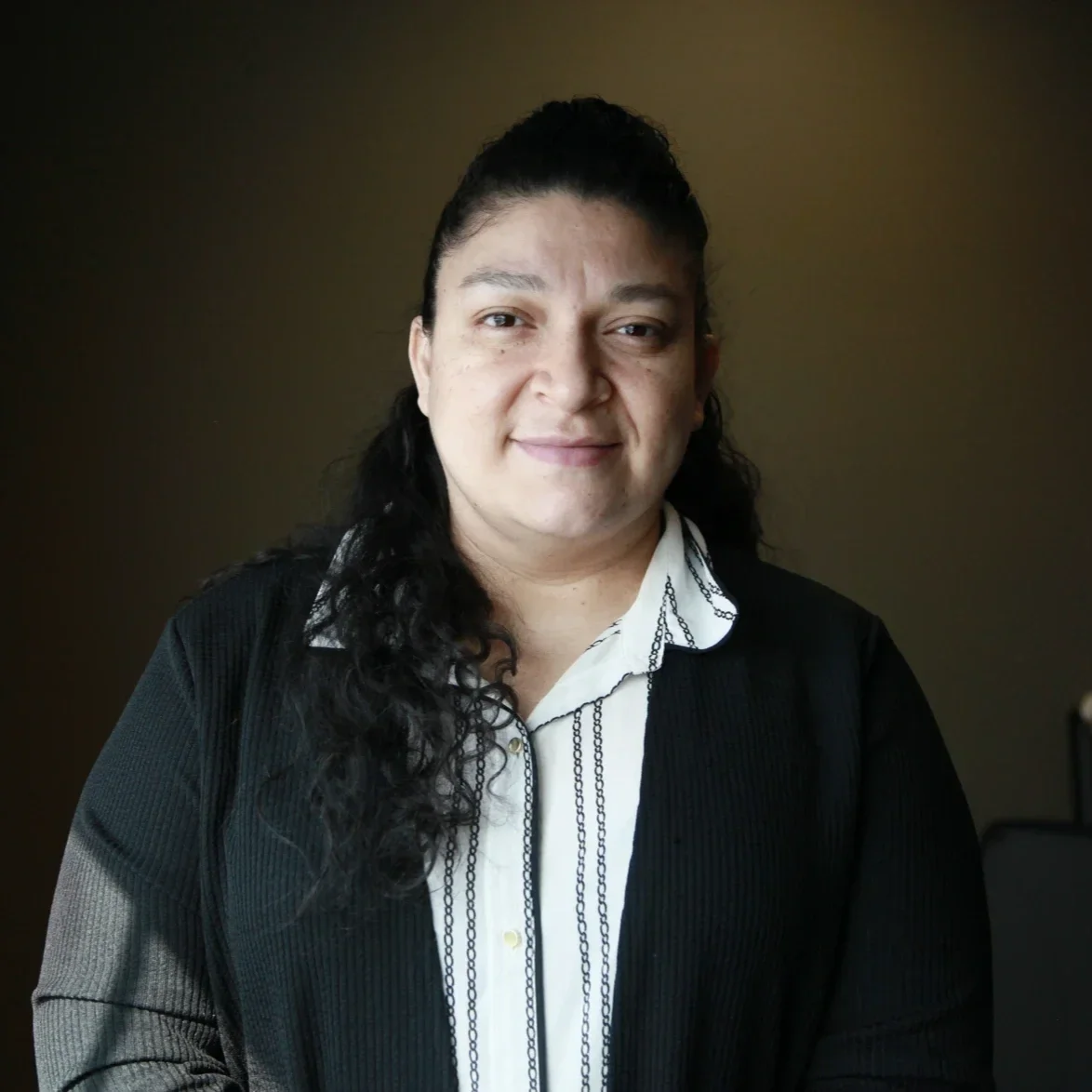
Angela Mercado. Image Source: Gaby Lozada/NHPR
Angela Mercado, a native of Ecuador, is the founder of the Community Engagement Training Center (CETC), where she helps connect New Hampshire residents with resources, information, and opportunities for personal and community growth. She has spent 25 years serving the Nashua community through work in human services and community engagement. Mercado holds an associate degree in Human Services and a bachelor’s degree in Psychology and is pursuing a master’s degree in Counseling. Drawing on her professional experience, education, cultural background, and deep community connections, she created CETC as a welcoming space where people from diverse backgrounds can access support, build knowledge, and develop the confidence to help others. Angela has been married to her husband, Gabriel, for 30 years, and together they have five children. She credits the support of her mother, Judith, and working together as a family as essential to all she does and has accomplished.