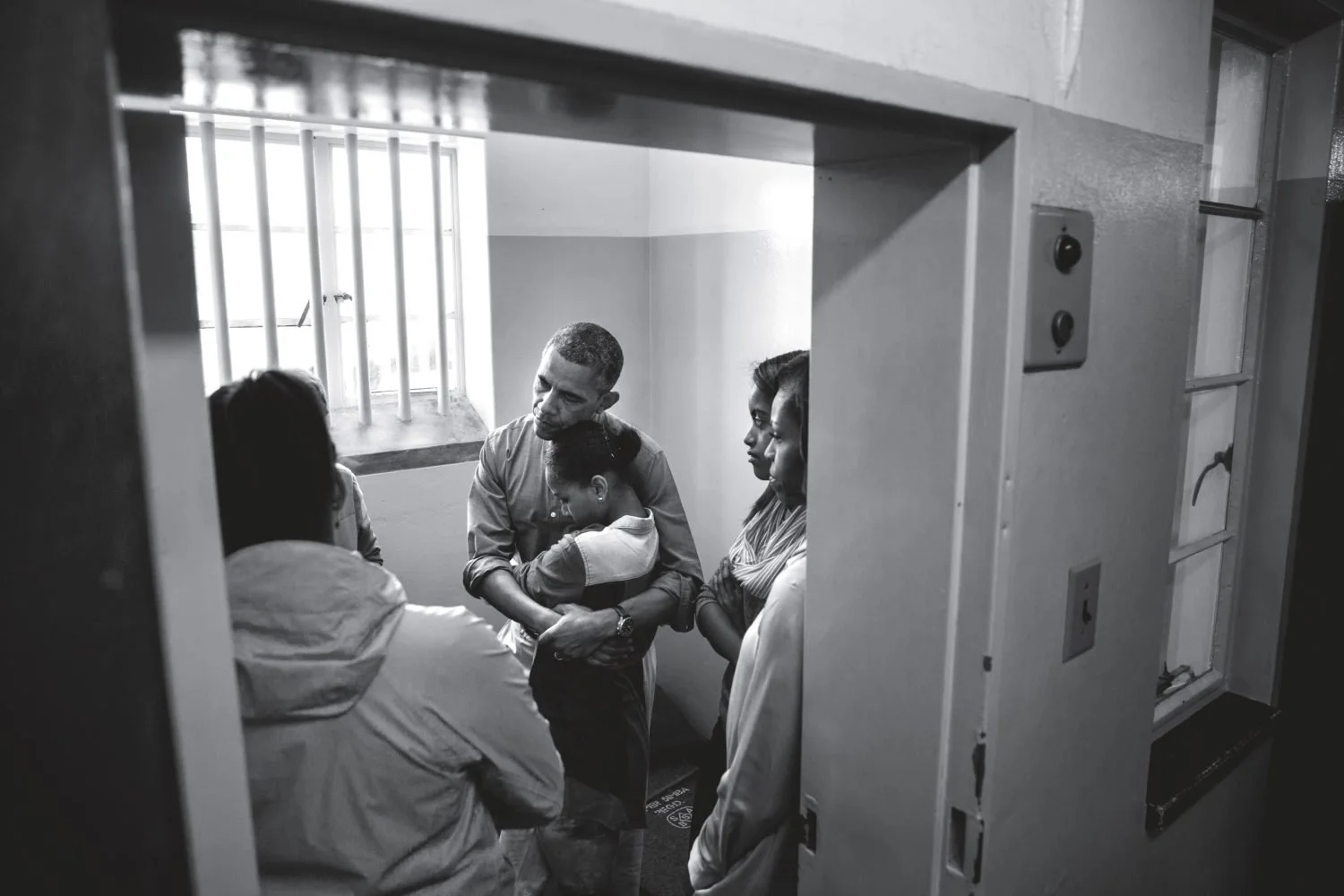
“President Barack Obama and First Lady Michelle Obama, along with daughters Sasha and Malia, stand in former South African President Nelson Mandela's cell as they listen to former prisoner Ahmed Kathrada during their tour of Robben Island Prison on Robben Island in Cape Town, South Africa, June 30, 2013.” Source: Official White House Photo by Pete Souza.
In our Icon Series, we give thanks to those whose lives have laid the foundation for our journey toward justice and equity. In this season of gratitude and reflection, the New Hampshire Center for Justice & Equity celebrates the extraordinary life of Barack Obama.
About Barack Obama
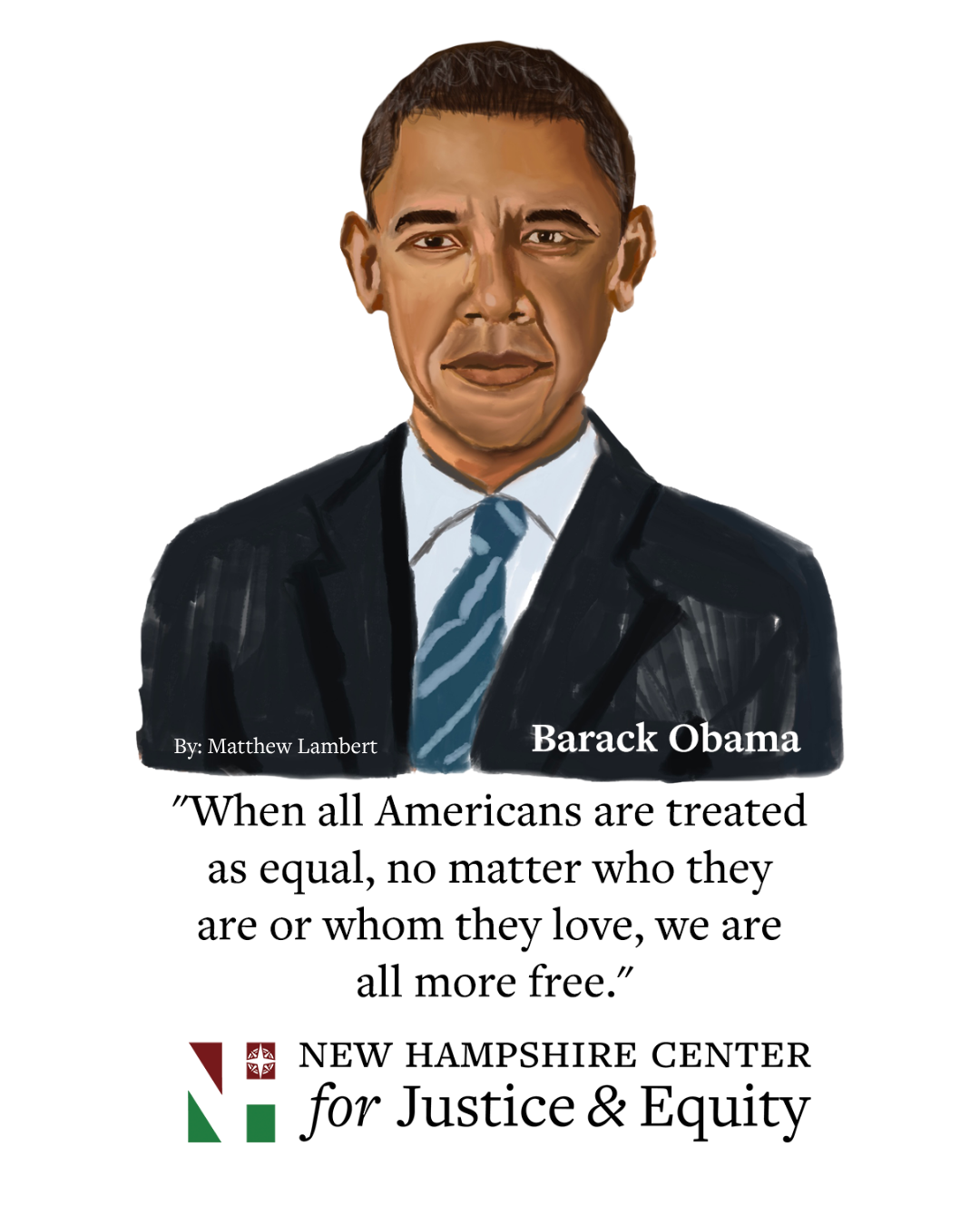
Barack Obama is the 44th president of the United States and the first Black American to hold the office, serving two terms in the White House from 2009 to 2017. Before becoming president, former President Obama worked as a community organizer, civil rights attorney, law professor, and U.S. senator representing Illinois. Throughout his career, he has emphasized civic participation, equal opportunity, and public service. His election marked a historic milestone in American politics, sustaining his belief that lasting change depends on people coming together to address shared challenges.
A Multicultural Upbringing
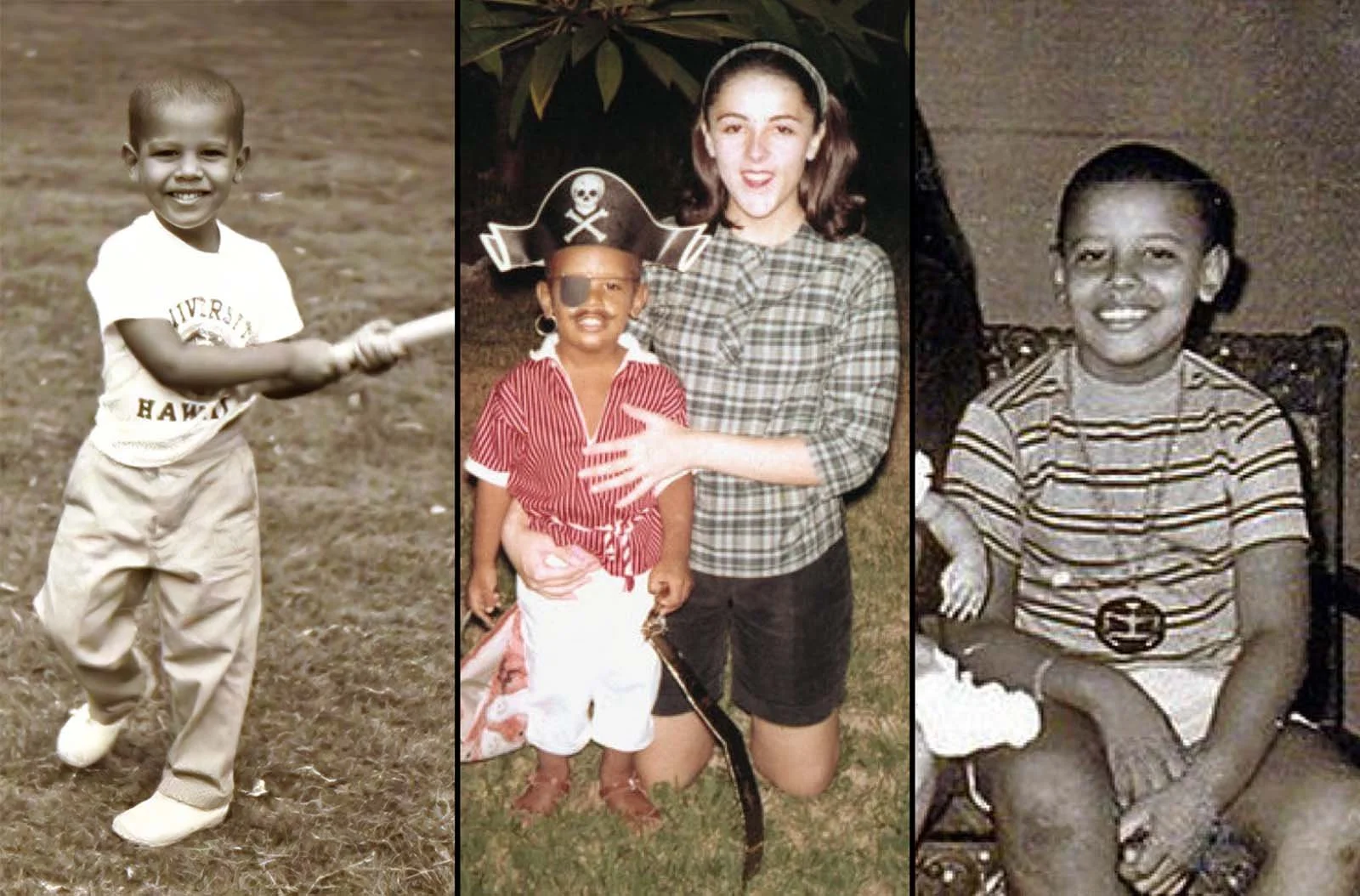
Childhood photos of Barack Obama. Source: Rare Historical Photos.
Barack Hussein Obama II was born in Honolulu, Hawaii, on August 4, 1961, to Ann Dunham, an American from Kansas, and Barack Obama Sr., an economist from Kenya. His parents met while going to college in Hawaii but separated when he was 2 years old. After the divorce, Obama’s father moved to Massachusetts to pursue a doctorate at Harvard, and his mother married Lolo Soetoro, a colleague from Indonesia, where Obama spent part of his early childhood.
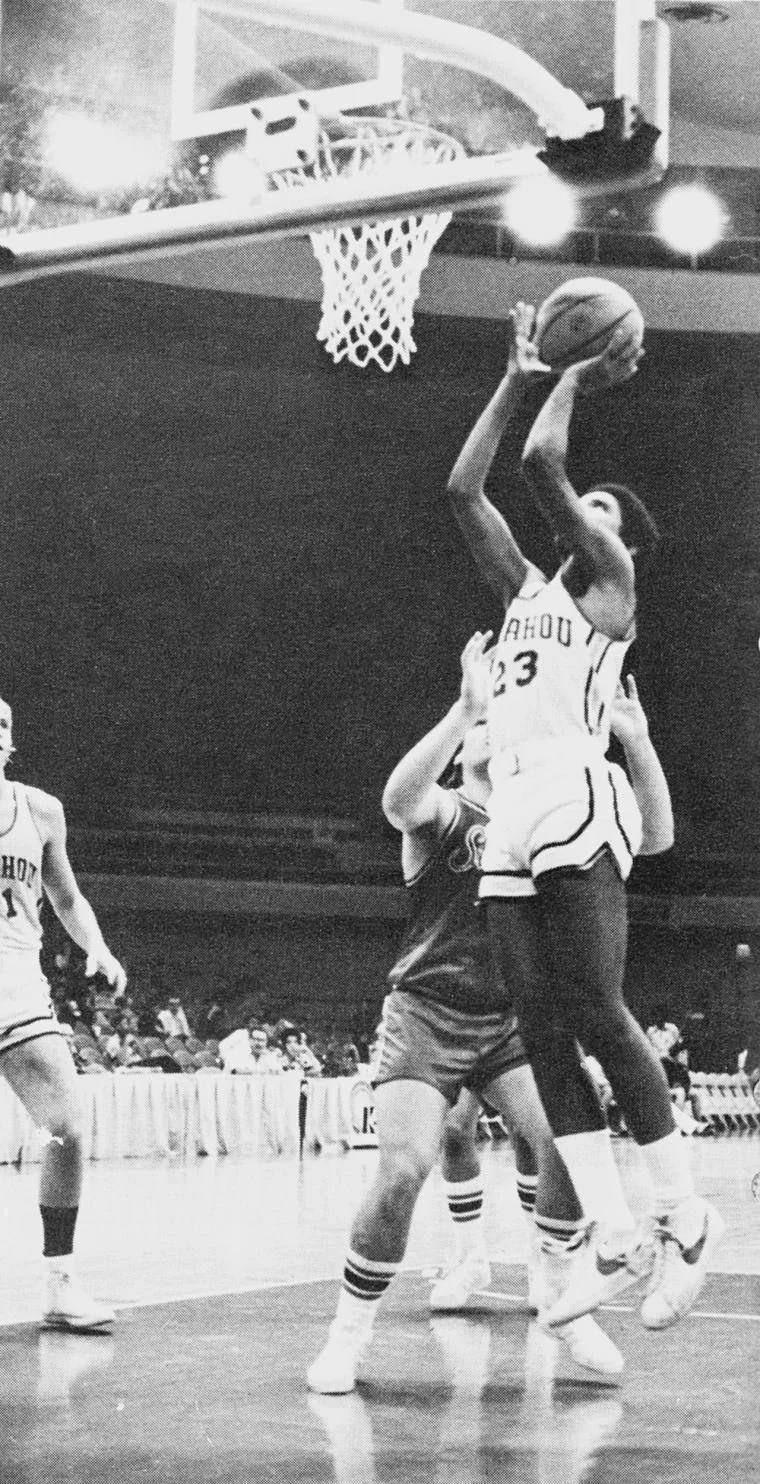
Obama plays basketball as a highschool senior in 1979. Source: Photograph courtesy of Barack For America.
At age 10, in 1971, Obama returned to Hawaii to live with his maternal grandparents, Madelyn and Stanley Dunham. He was later joined by his mother and half-sister, Maya Soetoro-Ng. There, he attended Punahou School in Honolulu, graduating with academic honors in 1979. As one of three Black students, Obama became conscious of racism from an early age. His upbringing across different cultures and multiracial family experiences further informed his reflections on identity, race, and belonging.
Obama spent two years at Occidental College in Los Angeles before transferring to Columbia University in New York City, where he earned a Bachelor’s Degree in Political Science in 1983. After graduating, he worked as an analyst for Business International Corporation in New York City before accepting an opportunity that changed the course of his career.
Community Organizing and Civil Rights Law
In 1985, Obama moved to Chicago to work for the Developing Communities Project as a community organizer on the city's South Side. Working with residents, religious groups, and local organizations in majority Black neighborhoods affected by industrial job losses, he helped coordinate efforts around employment opportunities, housing conditions, and neighborhood needs.
Obama enrolled at Harvard Law School in 1988, after nearly three years as an organizer. He became the first African American president of the Harvard Law Review, a nationally recognized legal journal, and graduated magna cum laude in 1991. This achievement earned him a contract from Random House to write a book about race relations, “Dreams from My Father: A Story of Race and Inheritance” (1995).
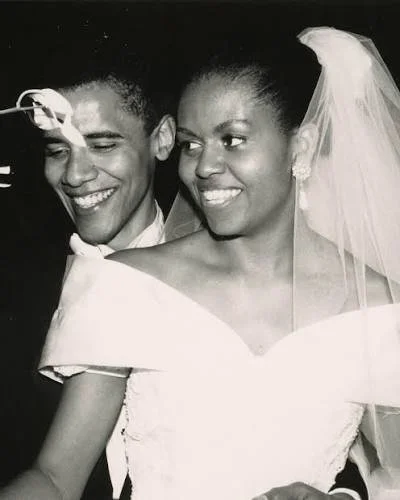
One of Barack and Michelle’s wedding photos. Source: @barackobama on Instagram.
After graduating, Obama returned to Chicago and served as the Illinois Executive Director of Project Vote!. He later worked as a civil rights attorney and taught constitutional law at the University of Chicago Law School between 1992 and 2004. In 1992, he married Michelle Robinson, who had been his mentor during a summer internship at a corporate law firm in Chicago. Together, they have two daughters, Malia and Sasha.
From State Politics to the National Stage
Obama entered public service in 1996, when he was elected to the Illinois State Senate. He was reelected in 1998, working across party lines on legislation involving ethics, health care, early childhood education, and support for working families. In 2000, Obama made his first run for the U.S. Congress for Illinois' First District, but lost to incumbent Representative Bobby Rush, who was a former Illinois Black Panther leader.
Four years later, in 2004, he decided to run for the open U.S. Senate seat, vacated by Republican Peter Fitzgerald. That summer, his keynote address at the Democratic National Convention, emphasizing unity between Americans across differences in race, background, and political affiliation, brought him national attention. He was elected as the junior Senator from Illinois in November 2004, and completed his second book, “The Audacity of Hope: Thoughts on Reclaiming the American Dream”(2006), around this time.
His time in the Senate was relatively brief, but it positioned him for a presidential campaign. In February 2007, Obama announced his candidacy and faced Hilary Clinton in the Democratic Primary before running against Republican nominee John McCain in the general election. He campaigned on financial reform, alternative energy, and reinventing education and health care.
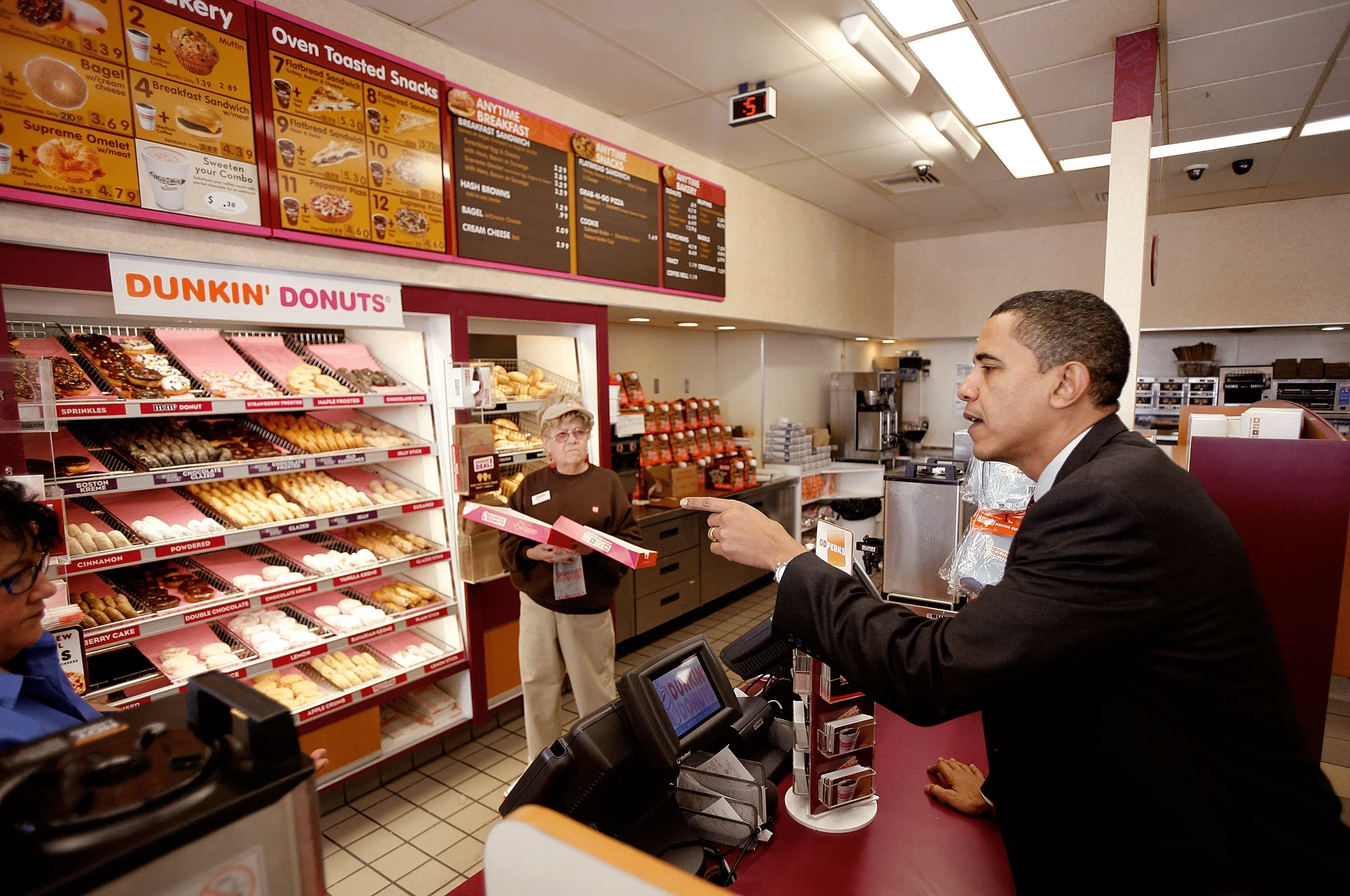
Obama stops to buy doughnuts for campaign volunteers at a Dunkin' Donuts January 8, 2008 in Manchester, New Hampshire. Source: Chip Somodevilla/Getty Images.
Making History in the White House
On November 4, 2008, Obama made history as the first Black American to win the presidency. He was inaugurated on January 20, 2009, taking office during a severe economic crisis and two ongoing wars in Iraq and Afghanistan. His administration's priorities included a $787 billion economic stimulus package intended to support economic recovery, health care reform, financial regulation, and foreign policy. In 2009, Obama received the Nobel Peace Prize in recognition of his efforts to strengthen international diplomacy and cooperation.
One of his defining achievements as the 44th U.S. President was the Affordable Care Act (ACA), signed into law in 2010. The law expanded access to health insurance, introduced consumer protections, and changed how health coverage was regulated in the United States. Despite legal challenges, political opposition, and a troubled initial rollout of its online enrollment system, the ACA extended health coverage to millions of Americans.
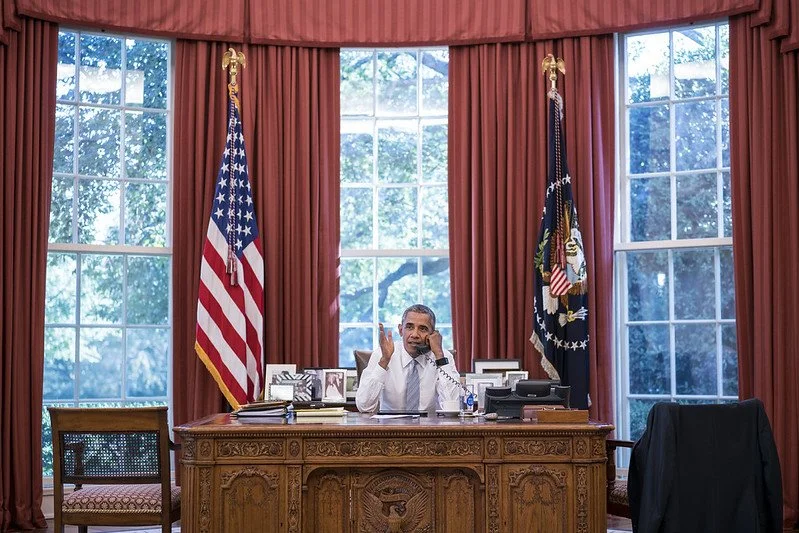
Obama talks on the phone with Cuba President Raúl Castro in the Oval Office, Sept. 18, 2015. Source: Official White House Photo by Pete Souza.
On civil rights and immigration, the administration took several consequential steps. Obama signed the repeal of the military's “Don't Ask, Don't Tell” policy in 2010, allowing gay and lesbian service members to serve openly. He was also the first sitting U.S. president to publicly support same-sex marriage. In 2012, his administration established the Deferred Action for Childhood Arrivals (DACA) program, providing eligible individuals brought to the United States as children with temporary protection from deportation and authorization to work.
In 2011, he authorized the operation that killed al-Qaeda leader Osama bin Laden, responsible for planning the September 11, 2001, terrorist attacks. His administration pursued diplomatic engagement with Iran, culminating in a 2015 agreement intended to limit Iran’s nuclear program in exchange for sanctions relief. He also worked to open dialogue with Venezuela and Cuba.
Obama’s presidency was not without controversial decisions. Reelected in 2012, he expanded U.S. military operations against extremist groups, including the Islamic State in Iraq and Syria, and faced criticism over the use of drone strikes and the continuation of detention at Guantanamo Bay, despite his early pledge to close the facility. 2013 revelations about the National Security Agency’s extensive surveillance programs also prompted public debate about national security, privacy, and government surveillance.
Carrying the Work Forward
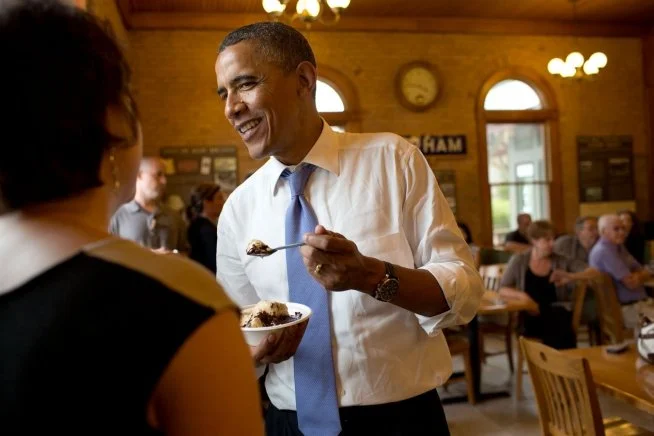
President Barack Obama at the UNH Dairy Bar on the University of New Hampshire campus in Durham, N.H., June 25, 2012. Source: Official White House Photo by Pete Souza.
After leaving the White House in January 2017, Obama continued his work through the Obama Presidential Center, which supports leadership development and civic engagement, including programs to help young people and community leaders create change in their communities.
As an NHCJE Icon, Obama’s story reflects how collective action can lead to broader public leadership. His presidency placed a Black family at the center of American political life and changed public expectations about who could occupy the nation's highest office. Yet, representation is only one part of advancing justice and equity. Sustained progress depends on communities, organizations, and individuals continuing to participate in civic life and working together to strengthen their communities and create opportunities for future generations.
Learn More about Obama
https://www.biography.com/political-figures/barack-obama — Biography.com
https://www.obamalibrary.gov/obamas/president-barack-obama — National Archives - Barack Obama Presidential Library
https://obamawhitehouse.archives.gov/administration/president-obama - The White House Archives - President Barack Obama
https://millercenter.org/president/obama/life-before-the-presidency - Miller Center
https://www.whitehousehistory.org/bios/barack-obama — The White House Historical Association
https://www.obama.org/ — Obama.org
Call to Action
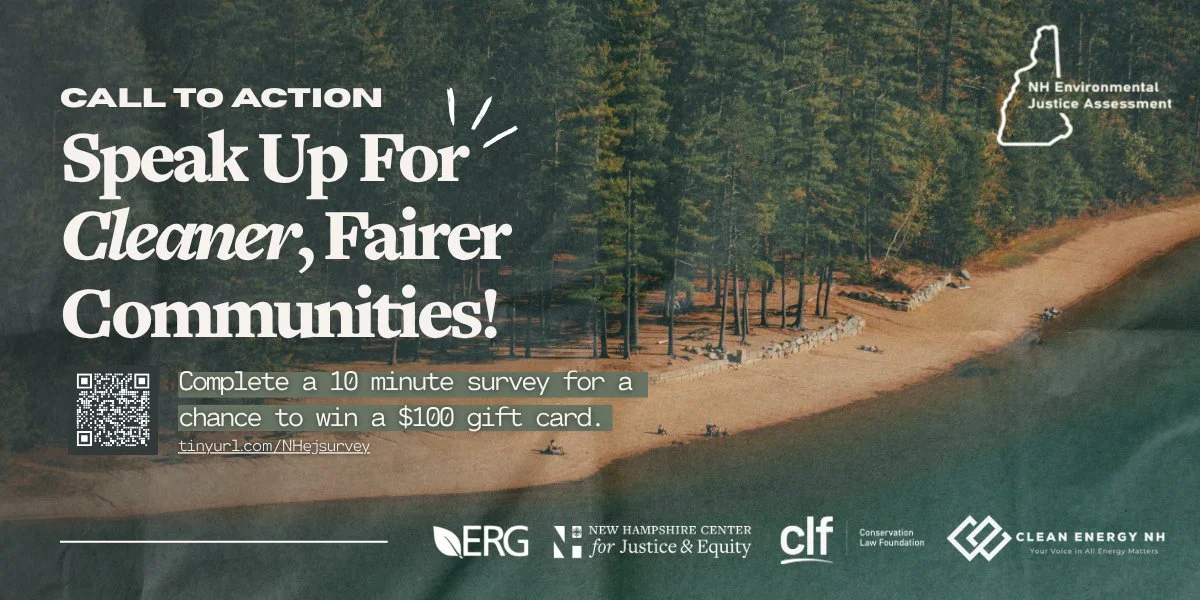
The survey will help inform the New Hampshire (NH) Environmental Justice (EJ) Assessment, which will serve as a vital step to ensuring that NH residents—no matter their income, race, or where they live, work, or play—have clean air and water, accessible green spaces, and healthy homes.
All responses are anonymous
It takes about 6-12 minutes to complete
The survey will be open until November 17, 2026
Adults aged 18 years or older living in New Hampshire are eligible to take the survey
Survey respondents can enter a drawing for one of five $100 gift cards
The survey is part of the New Hampshire Environmental Justice Assessment, sponsored by Conservation Law Foundation, Clean Energy New Hampshire, and New Hampshire Center for Justice & Equity.