
The Myth That Made Us: Rethinking the Stories We Tell About Wealth and Opportunity
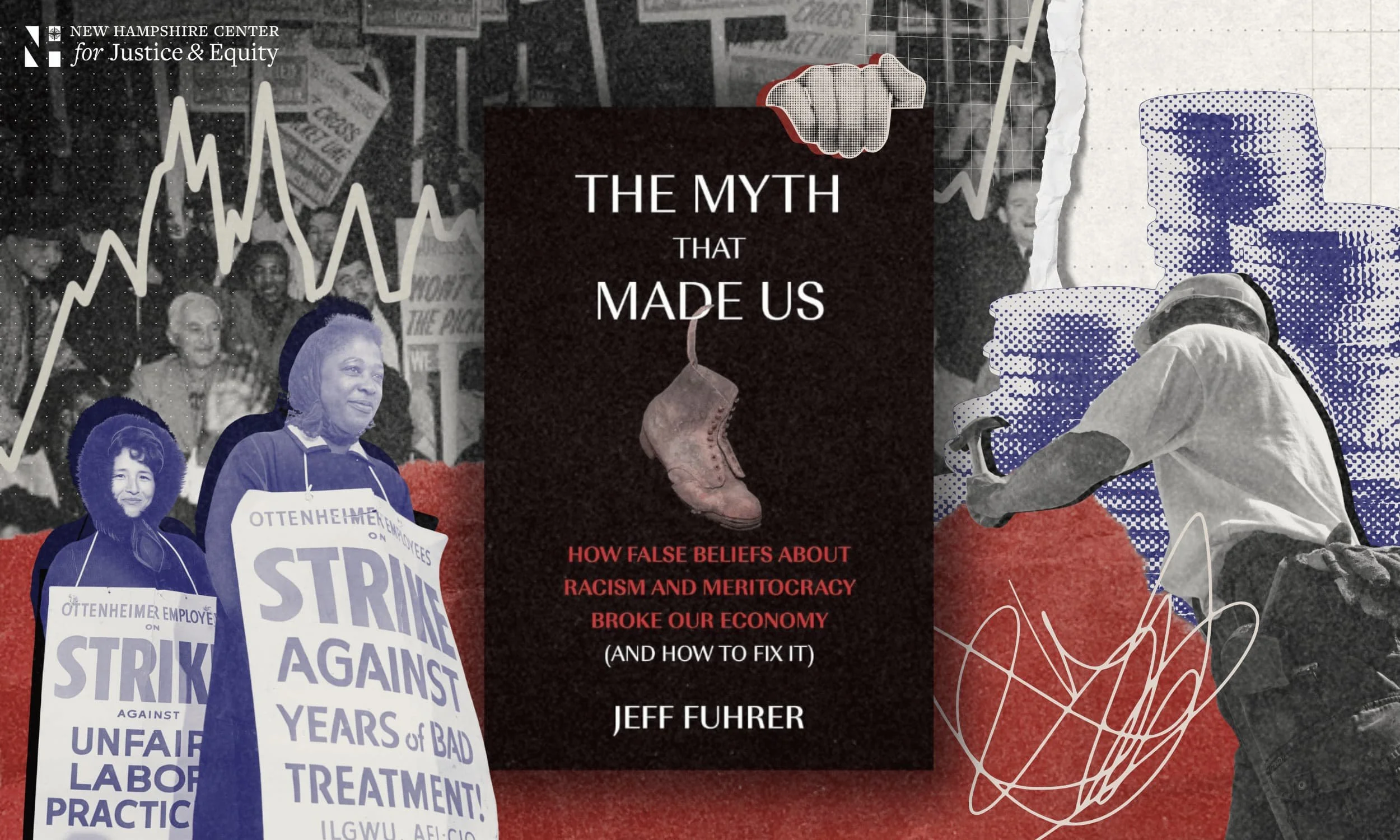
For decades, Americans have been told a simple tale about economic success: work hard, make good choices, and you too can build a better life. But that’s not the full story. The New Hampshire Center for Justice & Equity (NHCJE) spoke with economist, Brookings Scholar, and former Federal Reserve Bank of Boston Executive, Jeff Fuhrer, about The Myth That Made Us, his book and upcoming documentary with the same name.
The book and film examine the narratives that have shaped how Americans understand success, failure, wealth, and opportunity. The central argument explores how false beliefs about meritocracy and a history of racist policies and practices have helped justify an unequal economic system that benefits from its own disparities.
The Myth of Meritocracy and the Self-Made Person
The idea of the “self-made” American is deeply rooted in the country’s history. Fuhrer traces this narrative back to the early years of the republic, when the United States was developing a national identity around individualism, self-determination, expansion, and the promise of abundant opportunity beyond the frontier.
However, the ‘rags to riches’ stories that have become embedded – and celebrated – in the nation’s culture ignore the many ways that the United States created pathways for some people at the expense of others, including the violent displacement of Indigenous Peoples from their land and the back-breaking labor of enslaved Africans.
Similarly, today, the notion that individual effort is the primary determinant of success – and that everyone has the same chance to ‘make it’ – overlooks the many factors that shape economic outcomes, as well as the inequities that can limit opportunity. “Family wealth, access to education, geography, race, social connections, public policy and plain luck all shape the opportunities available to us,” Fuhrer stated.
“Family wealth, access to education, geography, race, social connections, public policy and plain luck all shape the opportunities available to us.”
The Racial Wealth Gap Was Built Over Generations
The idea that everyone starts from the same place becomes particularly difficult to sustain when considering the history of race and wealth in the United States. For the author, one of the main flaws of the dominant ‘self-made’ narrative is the assumption that we live in a post-racist society.
Wealth is accumulated across generations, and government policies and practices have played a significant role in determining who had the opportunity to accumulate it. Unequal distribution of New Deal programs, the near-exclusion of Black workers from the original unemployment insurance system, discriminatory access to Federal Housing Administration assistance, the denial of GI Bill benefits to most Black veterans, redlining, and housing discrimination gave many (mostly white) Americans greater opportunities to accumulate wealth while excluding others.
The effects of those policies did not disappear when the policies themselves changed. According to the 2022 Survey of Consumer Finances, today, the United States continues to have a substantial racial wealth gap. The median White household holds close to $285,000 in net worth compared to $44,000 in Black households and $62,000 in Hispanic households.
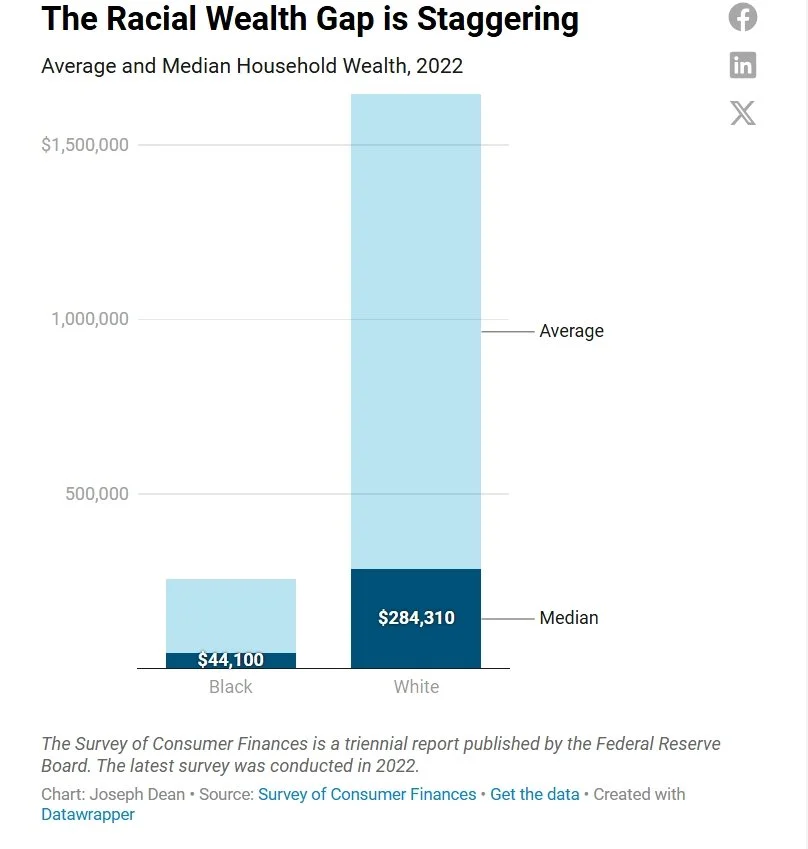
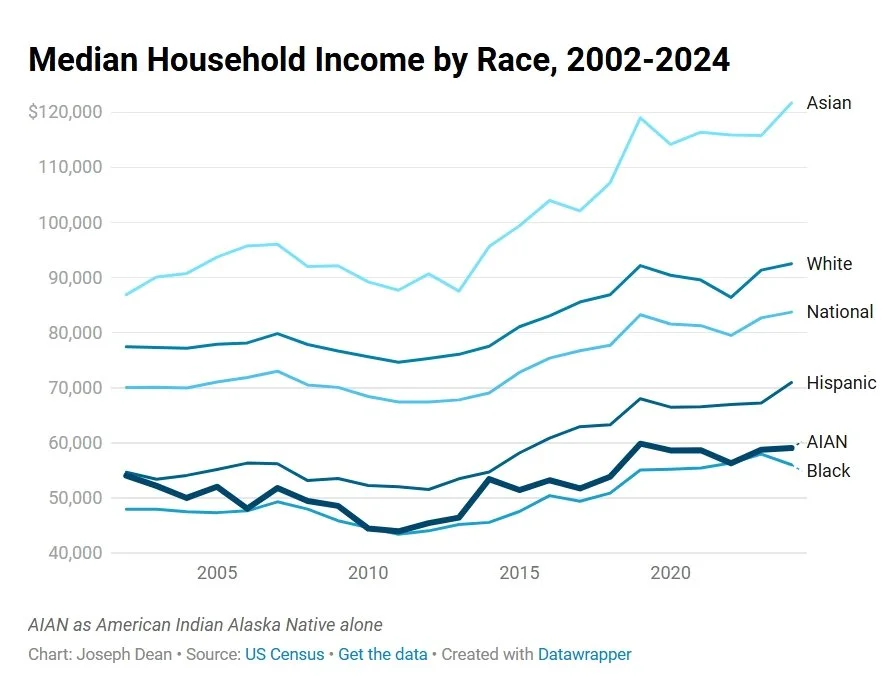
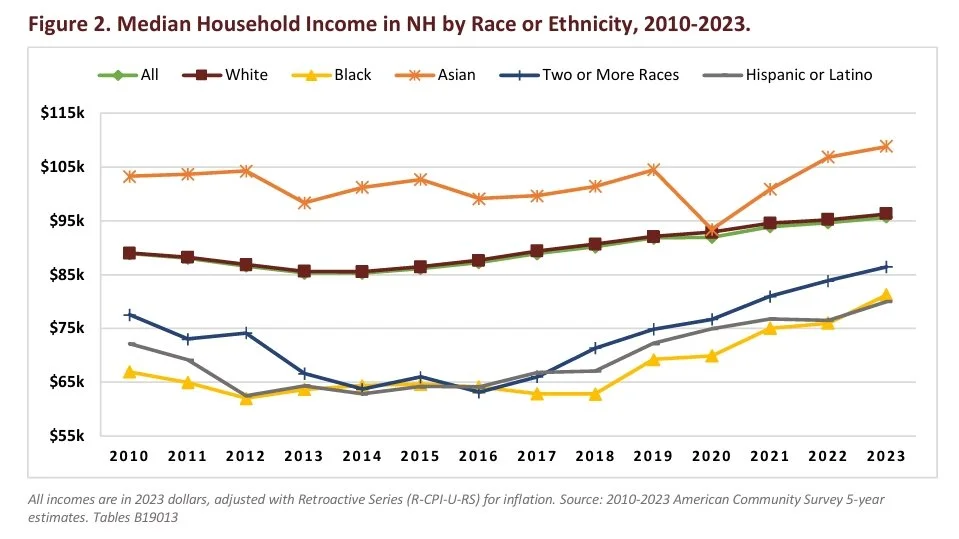
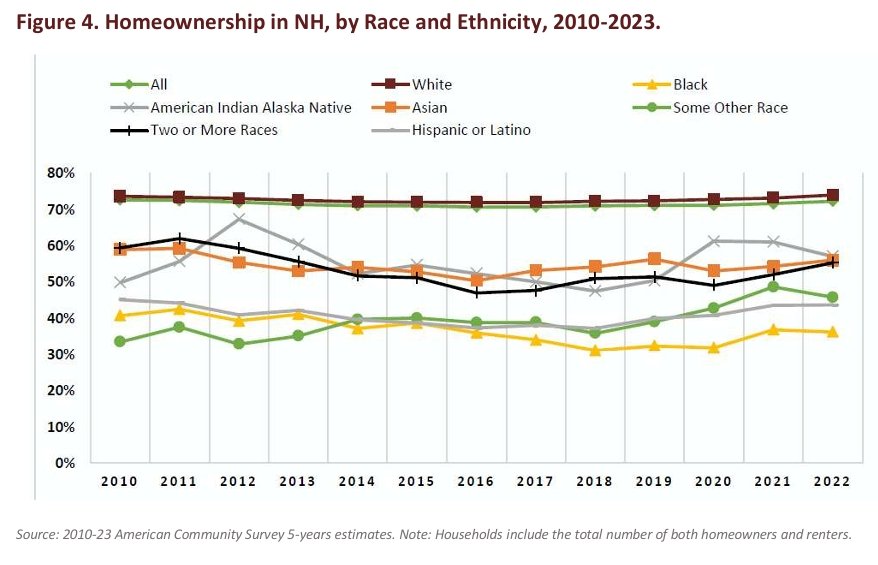
That gap illustrates why equal treatment today cannot, by itself, erase inequalities built over generations. Families that can purchase a home, access a well-resourced school district, receive higher education without taking on significant debt, inherit property, or receive other forms of financial support have a foundation from which future generations can build. Families who were systematically denied those opportunities start from a fundamentally different position.
The Role of Government
If economic outcomes are shaped in part by public policy, then the idea that government simply stands outside the economy is another myth that Fuhrer challenges. Government establishes the rule of law, protects property rights, builds infrastructure, both physical and technological, and creates many of the conditions that allow businesses and markets to operate.
“There has never been a completely ‘free’ market operating independently of those choices,” Fuhrer said. “What people really mean is, please keep the system the way it's working now because it's doing great for me.”
At the same time, government policies also shape markets through taxation, public spending, and regulation. Institutionalized racism has kept the system broken by design. New public policy should help create genuine opportunity, rather than protect the advantages that already exist.
“There has never been a completely ‘free’ market operating independently of those choices. What people really mean is, please keep the system the way it’s working now because it’s doing great for me.”
The Cost of Unequal Opportunity
When people lack access to quality education, stable employment, livable wages, health care, child care, housing, and other foundations of economic security, they are less able to develop their skills and reach their full economic potential. The costs translate into lost potential for the entire economy.
“We leave trillions of dollars of economic output and services on the table every year,” Fuhrer said. “People who could be inventing, building businesses, improving processes, or otherwise contributing to society may never have the opportunity to do so.”
This is one reason why Fuhrer rejects the idea that addressing inequality is incompatible with capitalism. For him, there are alternative ways to structure a capitalist economy beyond maximizing profits and shareholder value that would expand the pool of people with the stability and skills necessary to participate fully in the economy.
“We leave trillions of dollars of economic output and services on the table every year. People who could be inventing, building businesses, improving processes, or otherwise contributing to society may never have the opportunity to do so.”
Changing the Story to Change the System
These changes can’t happen unless we challenge the dominant narrative. “Some say this is simply the way capitalist economies work. Some people win, and some people lose,” Fuhrer recalled. “I know other capitalist economies where people have made different choices, politicians have made different choices, and businesses have made different choices. And they don't look the way ours does.”
Rather than continuing to treat economic hardship as evidence of individual failure, Fuhrer argues for greater investment in the conditions that allow people to succeed. That begins with funding early childhood care and education, and continues with investments in public K-12 education and workforce development, stronger training pipelines, and employment policies that provide wages and benefits sufficient for people to support their families.
These investments can take time to produce results. In the meantime, families need support now to meet basic needs. Fuhrer cited his research showing that more than one-third of U.S. families cannot afford basic necessities even after accounting for their earnings and government assistance. And research from the New Hampshire Fiscal Policy Institute showed that 1 in 4 Granite Staters don’t have $2000 in emergency savings due to lower incomes and higher expenses. Additional income support can help close that immediate gap while longer-term investments take effect.
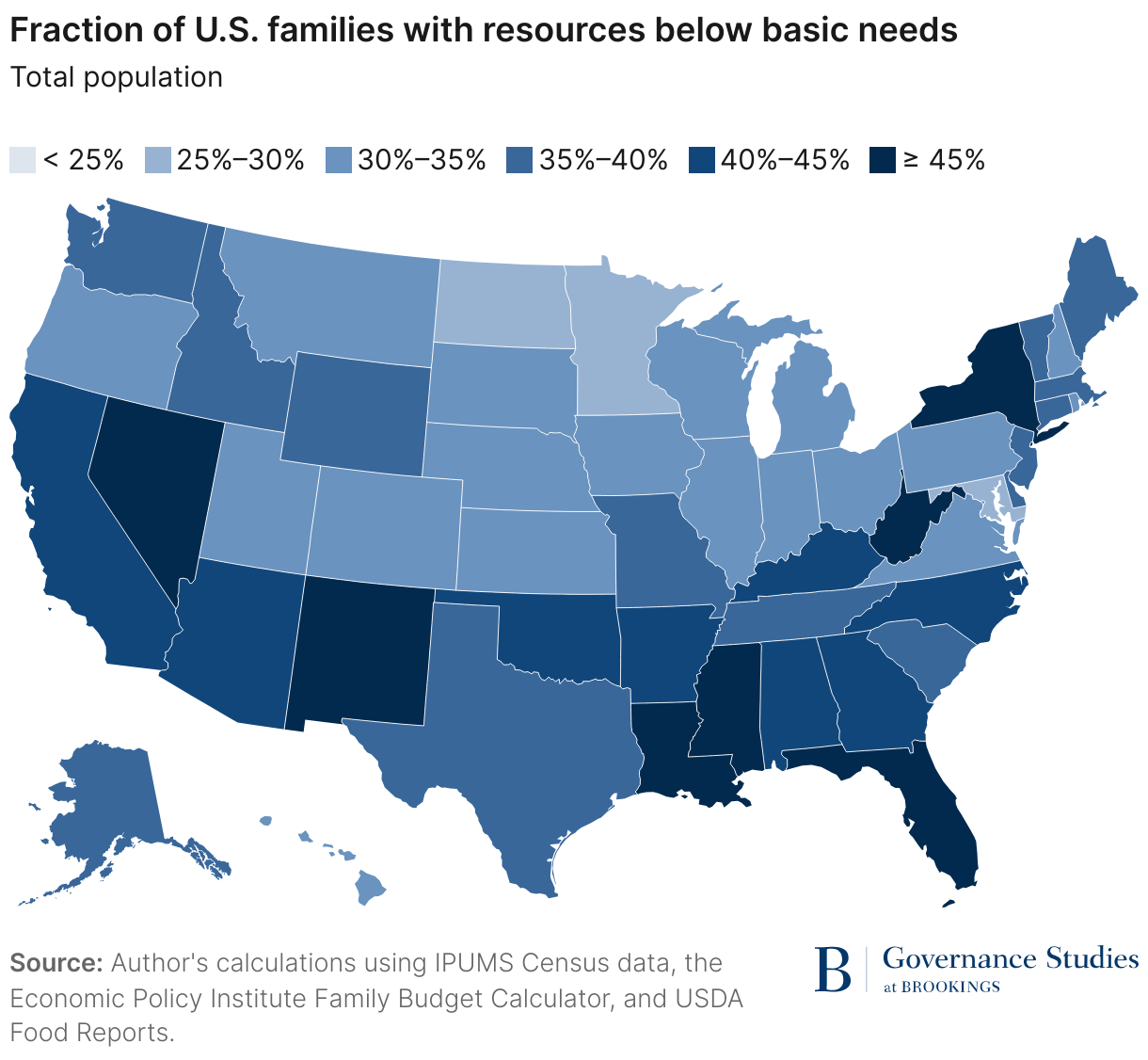
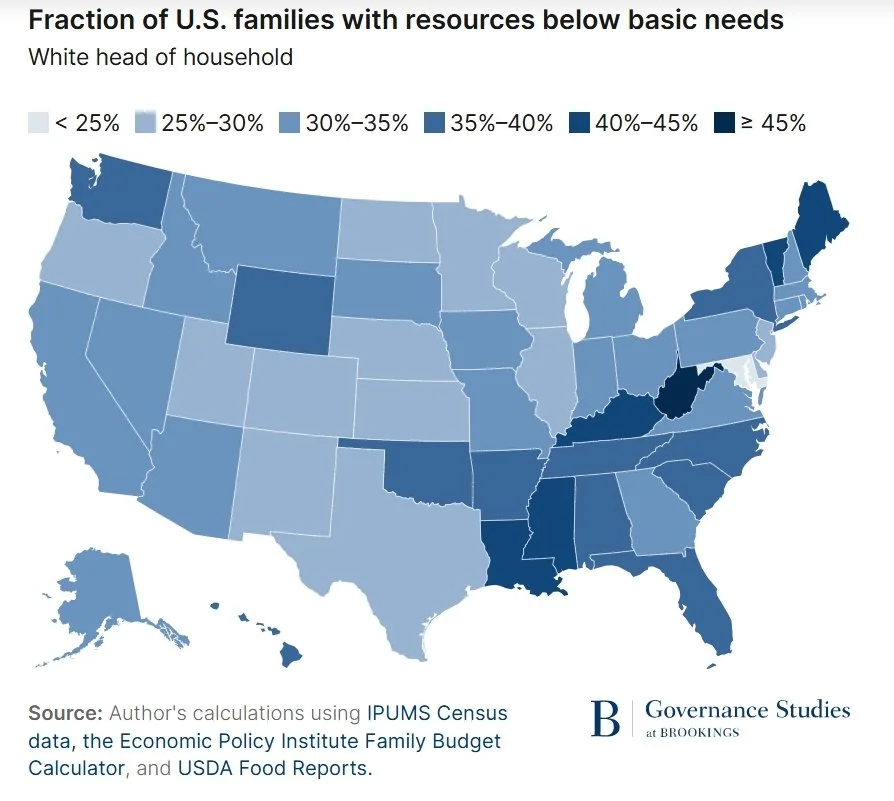
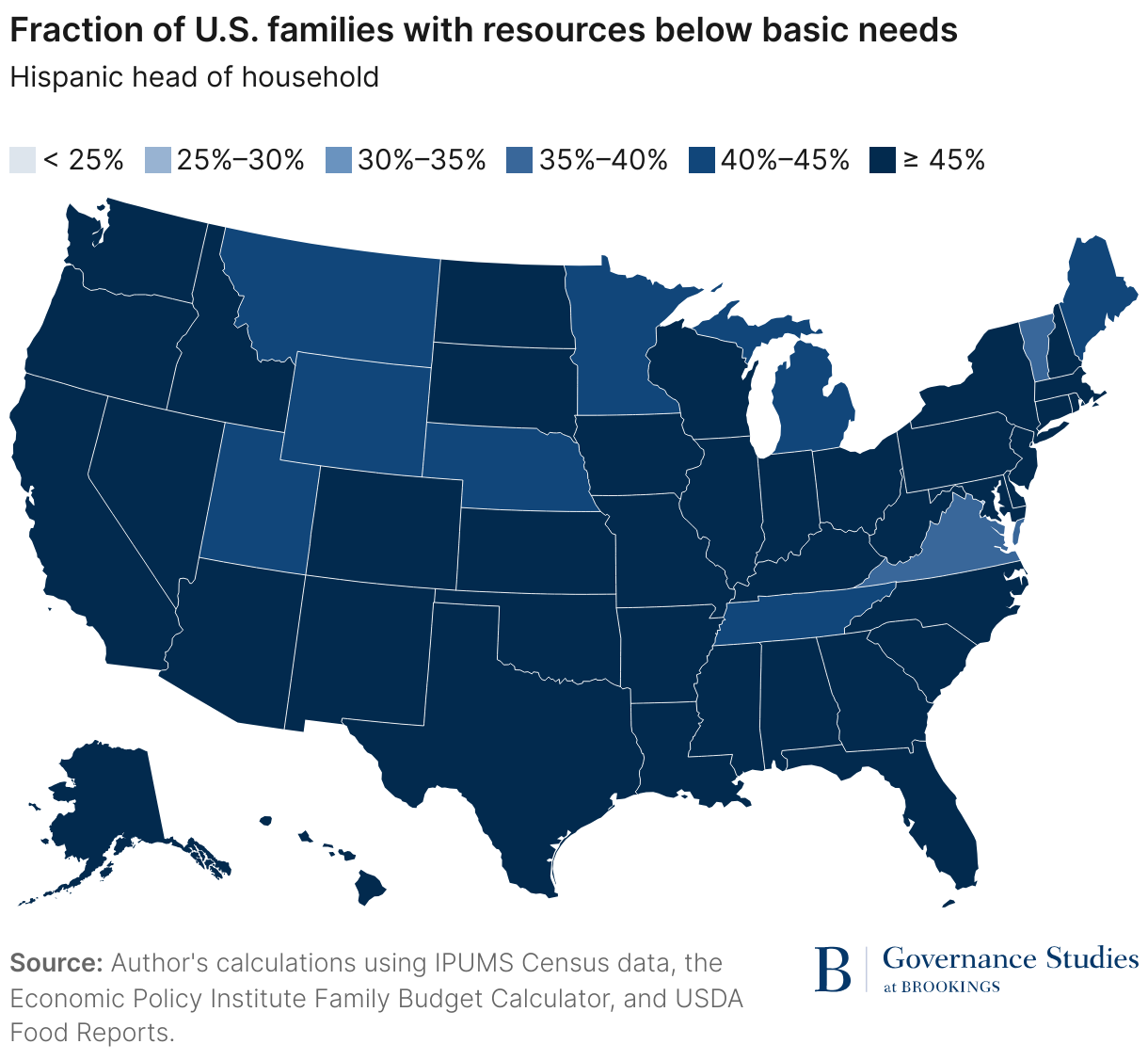
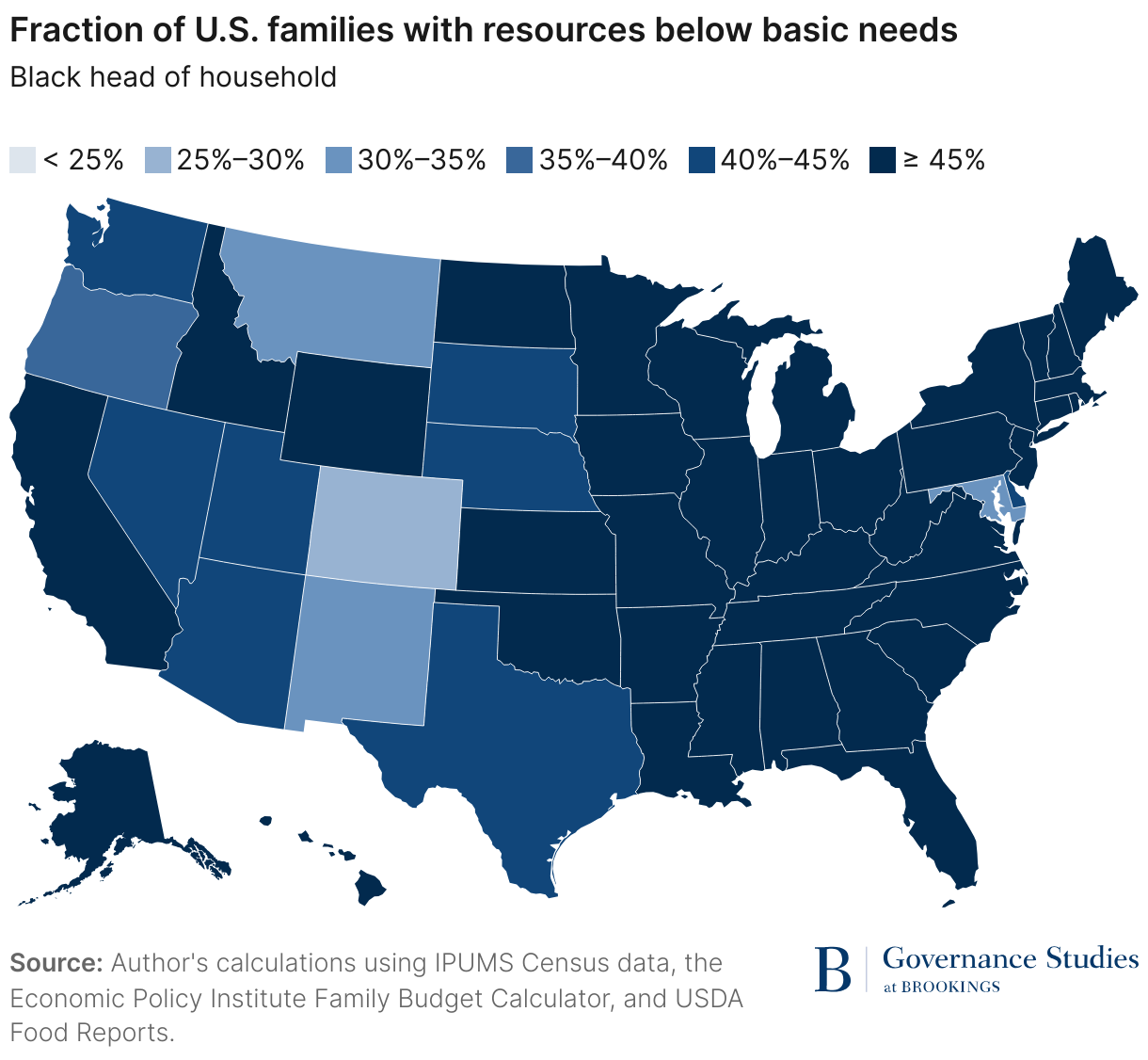

The goal is not to eliminate work, ambition, or economic incentives. Instead, Fuhrer challenges the assumption that extreme economic inequality is necessary to motivate people to work, innovate, or build businesses.
A fairer system that considers what levers people have access to, what barriers people may be facing, and what policies could change those conditions would still reward effort and achievement, but would give more people a genuine opportunity to benefit from their hard work.
“Some say this is simply the way capitalist economies work. Some people win, and some people lose. I know other capitalist economies where people have made different choices, politicians have made different choices, and businesses have made different choices. And they don’t look the way ours does.”
From Page To The Big Screen
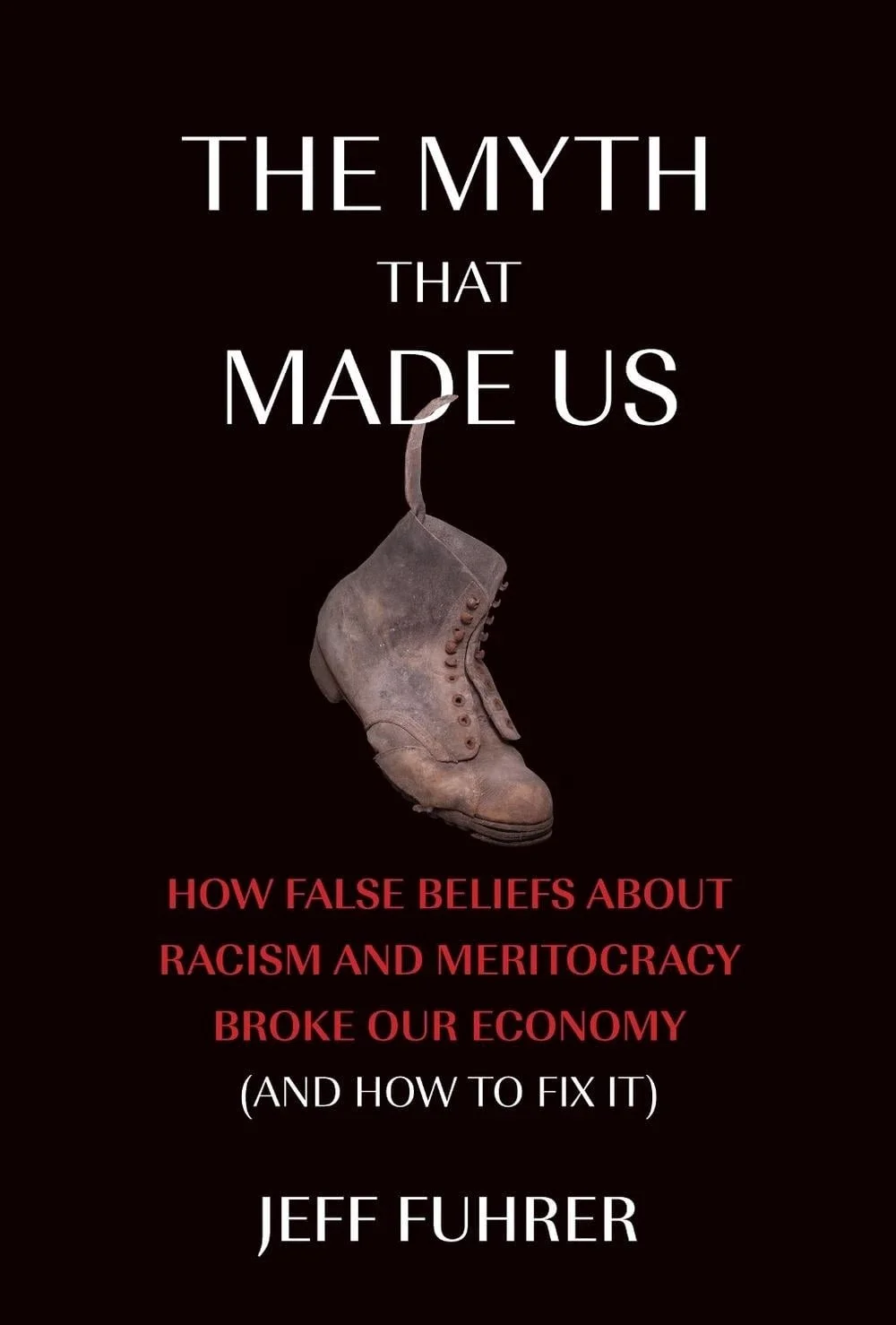
In writing The Myth That Made Us, Fuhrer paired research and data analysis with interviews with residents of low-income communities in Massachusetts. The documentary project grew from an observation he made along the way. “People connect with economic arguments differently when they hear directly from those living with the consequences,” noted Fuhrer.
Rather than relying solely on economists, policy experts, and literature, the film will bring those stories to the forefront, allowing people facing economic instability to share their experiences and challenge the assumptions surrounding opportunity and success.
Though additional funding is still needed to complete the project and bring it to audiences, the release is targeted for early summer of 2027. As a fiscal sponsor, NHCJE is helping support the documentary's development and fundraising efforts.
If you want to help bring The Myth That Made Us to a wider audience, watch the documentary trailer and visit https://jefffuhrer.com.
About Jeff Fuhrer

Jeff Fuhrer is a Nonresident Fellow at the Brookings Institution. He previously served as Executive Vice President and Director of Research at the Federal Reserve Bank of Boston, where he also oversaw the bank’s diversity and inclusion functions. He has held fellowships at Harvard Kennedy School’s Mossavar-Rahmani Center for Business and Government and served as Executive Vice President and Chief Strategy Officer at MassDevelopment. Fuhrer holds a Ph.D. and M.A. in economics from Harvard University and a B.A. in economics, summa cum laude, from Princeton University, where he ranked first in the economics department. His work focuses on economic policy, inequality, and the structural factors that shape economic opportunity in the United States.